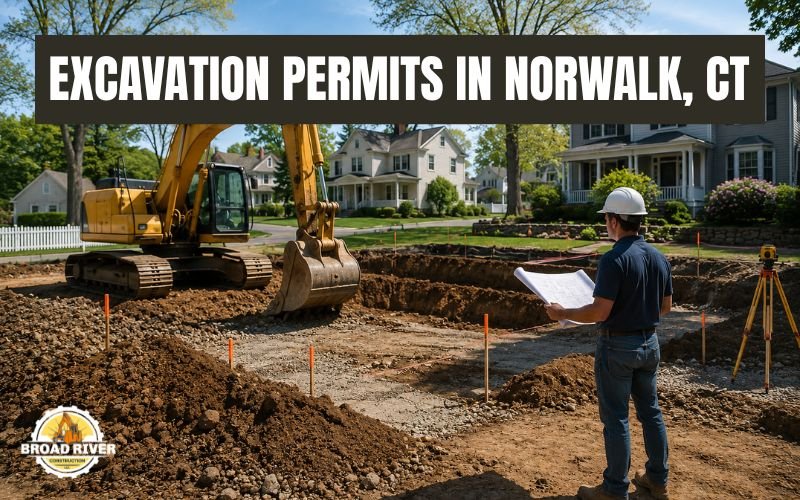
Ever watched a neighbor’s backyard project get shut down mid-dig because they didn’t have paperwork? Most people don’t think twice about pulling out a shovel until that moment. Norwalk, CT, has specific rules on when a permit is needed, and missing them costs you real time and money.
Knowing the rules upfront keeps your project on track. To know more about excavation permits in Norwalk, CT, read this blog by the end.
Do You Actually Need an Excavation Permit in CT?
Not every dig in Norwalk triggers a permit, but plenty do. Under City Code Chapter 97, covering Excavating and Filling of Land, you need a permit when your project moves 50 or more cubic yards of material total.
A handful of situations don’t require a permit:
- Foundation digging tied to an existing valid building permit
- Temporary digging for wells, tanks, vaults, or utility line trenches
- Cemetery grave openings and closings
- Public work done directly by or under the DPW Director’s authority
When Digging Requires a Permit in CT?
Picture a mound of dirt sitting at about 12 feet wide, 12 feet long, and 5 feet tall. Even a rectangular volume of those dimensions is only about 26.7 cubic yards. The permit threshold discussed here is 50 cubic yards. Cross that amount on your project, and Norwalk’s fill and excavation permit requirement applies, whether you’re taking material away, bringing it in, or a mix of both.
The city looks at the entire project volume, not one truckload at a time. Spreading the digging across multiple weekends doesn’t split the count. It all adds up under the same permit threshold.
Each separate lot or non-connected site needs its own permit. Transferring a permit to another person also requires written Director approval first.
Rules for Digging in Streets or Sidewalks in CT
Chapter 96 covers excavation in public streets and rights-of-way, and it’s firm: nobody digs there without a permit. There’s no minimum yardage exception for street work. It doesn’t matter if you’re only opening a small section of sidewalk.
Homeowners most often hit this requirement when running a utility connection to the street, building a new driveway apron, or doing anything that crosses from their property onto city ground.
Crucial Steps Before You Apply for Excavation Permit!
Call 811 Before You Dig, It’s Mandatory
Here’s how to do it:
- Pre-mark the dig area using white paint, stakes, tape, or flags before calling. State law requires this, and skipping it can delay your whole project.
- Call 811 or 1-800-922-4455, or file a locate request online at cbyd.com.
- Wait at least two full working days from the call before any digging begins. Weekends and holidays don’t count toward that waiting period.
- Make sure every utility company has responded with either colored ground markings or direct confirmation that they have no lines in your area.
Once all utilities respond and the waiting period clears, work can begin. One hard rule, though: no power tools within 18 inches of any marked gas line.
Why DPW Needs Your Call 811 Ticket Number?
When you apply for a street or right-of-way excavation permit in Norwalk, the DPW asks for your CBYD ticket number. That number confirms you ran through the utility locating process before work touched public infrastructure.
No valid ticket number means no permit issued. Make the 811 call first, write down the ticket number, then bring it to your application.
What is 24-Month Rule for Newly Paved Roads in CT?
Norwalk won’t approve an excavation permit on any street or sidewalk paved or rebuilt within the prior 24 months. The only way around it is a declared emergency, and even then, the contractor must have valid insurance and bond on file with the Director before touching anything.
Fresh pavement is a significant city investment. Cutting into it too soon causes damage that far exceeds what any permit fee covers. If your utility work sits near a road that looks recently redone, call the DPW and ask for the paving date before you submit an application. A 24-month restriction you find out about late in planning can push a project by months.
How to Apply for Your Excavation Permit in CT?
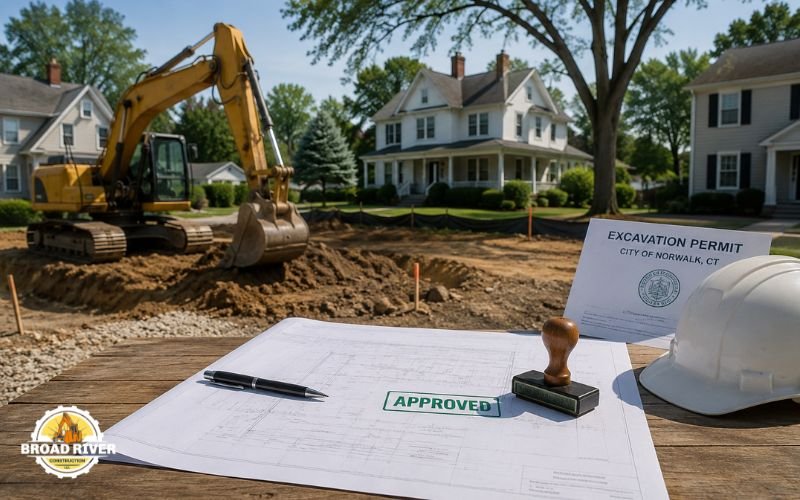
Applications for private property digs start with a submission to the Zoning Inspector. From there, the Zoning Inspector routes the application to DPW for review and approval under Chapter 118 of Norwalk’s Zoning Regulations.
Street and right-of-way applications skip the Zoning Inspector entirely and go directly to the DPW Permit Division at 125 East Avenue, Norwalk, CT.
Documents You Need to Submit for Excavation Permit in CT!
Here’s what to gather before filing your application:
| Document | Purpose |
|---|---|
| Completed permit application form | Required for all excavation permits |
| Site plan or project drawing | Shows the location and scope of excavation |
| Cubic yard calculation | Confirms whether the 50-yard threshold applies |
| CBYD ticket number | Required for all street or right-of-way work |
| Certificate of Insurance | Mandatory for street and right-of-way permits |
| Performance bond or surety | Required when DPW identifies a restoration risk |
How Long Does Approval of Excavation Permit Take?
Plan on two weeks as a starting point for standard jobs. That time covers application intake, plan review, and permit issuance.
When a project requires a public hearing, the timeline stretches. The city must publish a hearing notice in a local newspaper at least twice, with the first notice running no fewer than 10 days before the hearing date. That adds weeks in some cases.
Insurance and Bond Requirements
The City of Norwalk must appear on the certificate as an additional insured, and the policy needs to carry a 30-day cancellation notice provision.
Street work also requires a performance bond. A blanket bond option covers all permits issued to one applicant over 12 months, with a minimum amount of $50,000. That bond exists to cover the city if a contractor leaves a job incomplete or restores a site poorly.
When Does an Excavation Permit Expire?
Street encroachment permits last 14 days from the issuance date. Need more time? Request a renewal from the Director before the current one expires.
Land excavation permits under Chapter 97 don’t follow a universal expiration date. The Director sets specific timeframes and conditions on each permit individually. Let those conditions lapse or allow the site to reach an unsafe state, and the Director can issue a cease-and-desist order halting all work until the problem is corrected.
Restoring Your Site After Excavation
Finishing the dig is only part of the job. Chapter 97 makes site restoration a firm legal obligation.
The permit holder must replace a minimum of six inches of topsoil across all disturbed surfaces, then seed the area with a perennial cover crop and water it adequately. If the first seeding doesn’t establish even growth, reseeding is required until it does.
During the excavation in Norwalk itself, the top six inches of existing arable topsoil cannot leave the site. That layer must be set aside and returned to the surface when work wraps up.
Getting Your Final DPW Inspection
After work finishes and the site is restored, the permit stays open until DPW completes a final inspection. Give at least 24 hours’ notice before your requested inspection time. Walk-up requests on the day don’t guarantee an inspector.
The inspector verifies that the work matches the permit conditions and that the site is properly restored.
Quick Checklist Before Breaking Ground in Connecticut!
- Confirm your total project volume against the 50 cubic yard threshold.
- Check whether work touches any public street or right-of-way.
- Pre-mark the dig area in white before calling 811.
- Call 811 or visit cbyd.com and record your ticket number.
- Wait the required two full working days after your 811 call.
- File your application with the Zoning Inspector or DPW.
- Attach all required documents, including your CBYD ticket number.
- Confirm your insurance certificate lists Norwalk as an additional insured.
- Ask DPW whether your street falls within the 24-month paving restriction.
- Schedule your final inspection with at least 24 hours’ advance notice.
Conclusion
Pulling an excavation permit in Norwalk isn’t a big ordeal, but it does require knowing which rules apply to your project before work begins. The 50 cubic yard trigger on private property, the automatic permit requirement for street work, the 811 call, insurance, bonds, and site restoration all connect into a process that, once understood, is pretty manageable.
Broad River Construction LLC works through this process on a regular basis for homeowners. Got a project coming up? Reach out before you start digging.
FAQs
Do I need an excavation permit for digging in Norwalk, CT?
If you’re moving more than 50 cubic yards of material, yes. Under that, you’re usually fine, but a quick call to DPW to confirm never hurts.
What is the cost of an excavation permit in Norwalk, CT?
It depends on the project. Call the Norwalk DPW at 125 East Avenue or stop in; they can give you the current fee schedule based on your specific work.
Do I need to call 811 before digging in Norwalk, CT?
You’ll need the 811 ticket number to complete the permit application for road and sidewalk work, so call first. Under Connecticut law, you’re required to call before any digging, regardless.
The road near my project was just repaved. Is that a problem?
It might complicate things. Norwalk has a 24-month restriction on cutting into newly paved roads. Contact DPW early to understand what that means for your timeline and what additional restoration they’ll require.
What happens if I excavate without a permit in Norwalk, CT?
Excavating without a permit in Norwalk, CT, can cause your project to get:
- Stop work orders
- Fines
- Mandatory Restoration
- Insurance Denial
Can I dig on newly paved roads in Norwalk?
It might complicate things. Norwalk has a 24-month restriction on cutting into newly paved roads. Contact DPW early to understand what that means for your timeline and what additional restoration they’ll require.