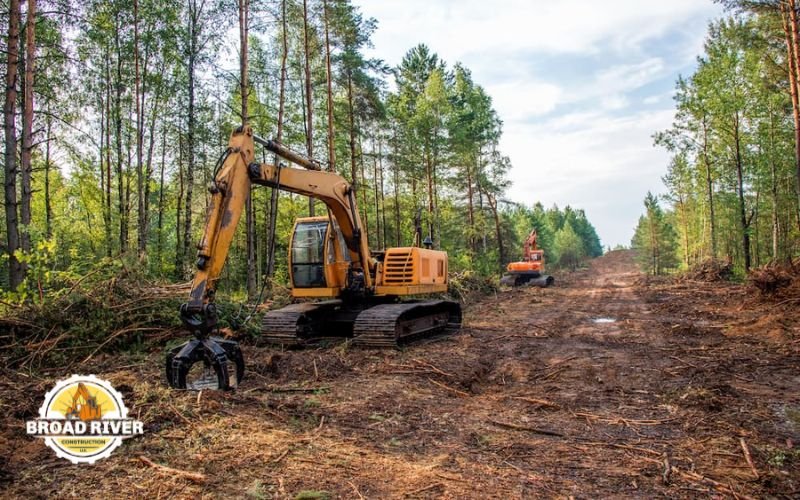
Bulk excavation moves huge volumes of soil for parking lots. Demolition excavation breaks up old concrete slabs or foundations. We use large excavators and hydraulic breakers to clear out old commercial sites in Stamford so people can start fresh. Demolition excavation means breaking up and removing existing structures from the ground. It is for old concrete foundations, basement slabs, retaining walls, and underground tanks. This involved the use of hydraulic breakers and large excavators.
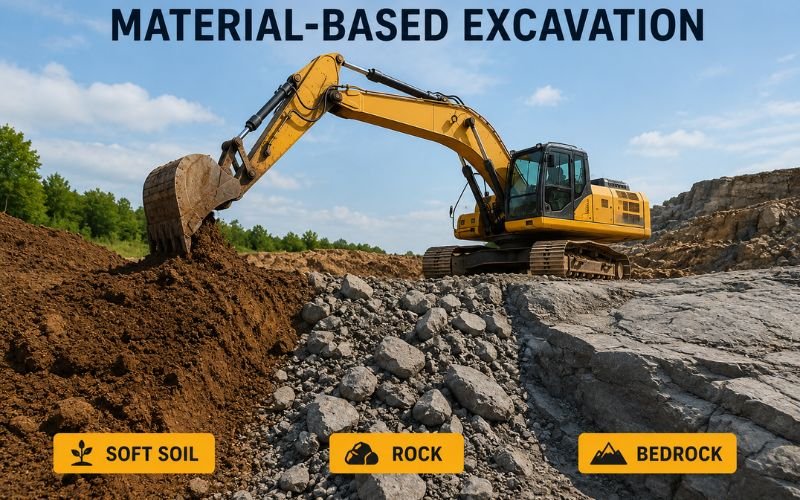
B. Material-Based Excavation Types
These types are chosen based on what is physically in the ground on your site.
8. Topsoil Excavation
The top 6 to 12 inches of most sites is organic topsoil. It is soft, compressible, and full of organic matter. It is great for growing grass, terrible for building on. Any structure placed over topsoil will settle unevenly over time. We break it with bulldozers and scrapers, but it is not wasted. We often pile it on-site and spread it back after construction finishes. That saves you the cost of buying topsoil later when you are ready to seed the lawn or plant around the foundation.
9. Earth (Subsoil) Excavation
This is the layer under the topsoil. It is denser and better for building. We use this subsoil for embankments, road bases, and drainage ditches. We move it with scrapers and track excavators. Subsoil is generally cheaper and faster to work with than rock.
10. Rock Excavation
Connecticut bedrock is mostly granite and schist. If your lot sits in an area with shallow bedrock, common across Fairfield County, you will hit solid rock during the dig. Standard equipment cannot move it. That is when rock excavation takes over. Two methods handle this:
Hydraulic breakers are attached to excavators and used for moderate rock volumes
Controlled blasting is used for large volumes and requires a state permit
Budget for this possibility early. Rock excavation costs 3 to 5 times more than standard soil excavation because it needs drill rigs and hydraulic breakers. People who find out mid-project take a hard hit to their budget. A soil test or site survey before you start can tell you what is down there.
11. Muck Excavation
Muck is a combination of soil and water, but it cannot handle any weight. You cannot build on it or place it under any structure. There are two prominent options: relocate it or spread it in a shallow layer. The layer should be dried before disposal. Muck is common near coastal areas. If your site is near any of these, plan for muck excavation in your budget.
CT DEEP Note: CT regulates excavation work near wetland areas. You may need a permit from CT DEEP before work can start. Skipping this step can halt your project and result in significant fines.
12. Channel and Drainage Excavation
These are two different types of excavation tasks. Channel excavation means clearing an existing ditch. You do this when a channel has filled with sediment, or you want to make it bigger. Drainage excavation means building a new drainage system from scratch. It can be for French drains, underground piping networks, and much more. Both types connect directly to proper site drainage, something a lot of homeowners do not think about until they have water in their basement.
13. Borrow Excavation
Sometimes what is on your site is not what you need. Borrow excavation solves that problem by bringing material in from an off-site location. Common borrowed materials include clean gravel, coarse sand, and engineered structural fill. People use borrowed material when the native soil is too wet, too high in clay content, too rocky to compact properly, or simply not enough volume to fill what needs to be filled. We handled a job in Westport recently where the native soil around a new foundation was too clay-heavy to use as backfill.
Quick Reference Table of Excavation
Not sure which type fits your project? Use this table to match your job to the right service.
Type
Best For
Material
Equipment
CT Example
Land Clearing
Pre-construction prep
Trees, stumps, debris
Bulldozers, mulchers
Lot clearing in Norwalk
Cut and Fill
Sloped, uneven sites
Native soil
Graders, scrapers
Lot leveling in Greenwich
Foundation
New home basements
Deep subsoil
Excavators, dump trucks
Basement dig in Westport
Trench
Utilities, drainage pipes
Soil
Trenching machines
Sewer line in Stamford
Footing
Concrete footings
Subsoil
Precision excavators
Home footing in Darien
Driveway
Access roads, driveways
Topsoil, soft subbase
Skid steers, compactors
Driveway in Fairfield
Bulk/Demolition
Large pads, old structures
Soil, concrete
Large excavators, breakers
Foundation removal in Stamford
Topsoil
Pre-build surface strip
Organic topsoil
Bulldozers
Lot prep in Greenwich
Subsoil
Foundations, embankments
Dense subsoil
Track excavators
Road base in Norwalk
Rock
Hard bedrock removal
Granite, schist
Hydraulic breakers
Rock removal in Ridgefield
Muck
Wet, saturated ground
Saturated soil
Long-arm excavators, pumps
Coastal site in Westport
Channel/Drainage
Flood control, water flow
Sediment
Excavators
Drainage ditch in Fairfield
Borrow
Backfill, grading
Gravel
Dump trucks
Foundation backfill in Westport
How Much Does Excavation Cost in Connecticut?
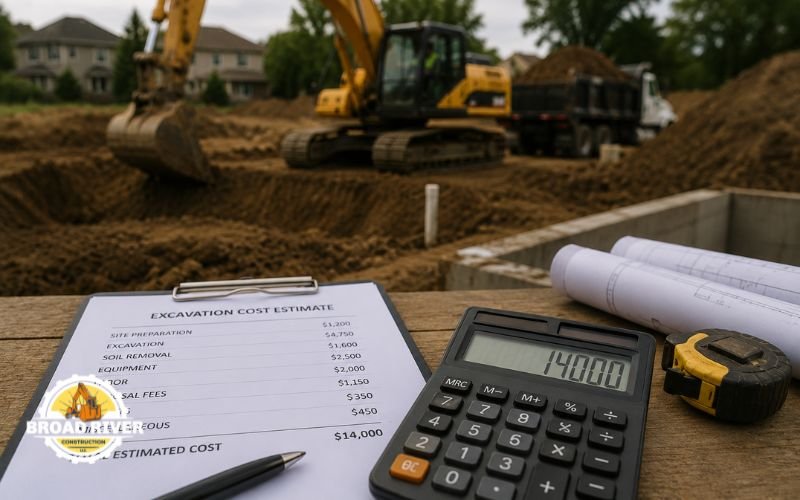
Excavation costs mainly depend on soil conditions. Soft soil is cheaper to remove, while clay and rocky ground cost more due to extra labor and equipment. In many parts of Connecticut, especially Fairfield County, hidden rock can quickly increase project costs, making a soil test a smart investment before digging begins.
Most excavation quotes include three main costs:
Equipment and machinery
Labor and crew work
Soil hauling and disposal
Reusing soil on-site can help reduce expenses.
Safety and Legal Requirements for Excavation
Excavation projects must follow OSHA trench safety rules, especially for trenches deeper than 5 feet. Contractors should also contact Connecticut 811 at least three business days before digging to mark underground utilities and avoid costly damage.
How to Hire the Right Excavation Contractor?
Before hiring a contractor, verify the:
Licensing and insurance
Workers’ compensation coverage
Local permit experience
Knowledge of local soil conditions
You should also ask about excavation permits, hidden rock costs, project timelines, utility marking, soil removal, and the equipment being used. Clear answers usually indicate a reliable contractor.
FAQs
What is the most common excavation type for residential projects?
Foundation excavation comes up the most on residential jobs. Almost every new home needs it. After that, trench excavation for drainage and utility lines comes in a close second. A lot of projects need both before the build is done.
What is borrow excavation, and when do you need it?
Sometimes the soil on your property just will not work. It is too wet, too rocky, too clay-heavy, or there simply is not enough of it. Borrow excavation is when we bring in material from somewhere else to fill, grade, or backfill your site properly. It costs a bit more, but skipping it causes bigger problems down the road.
How deep can you dig without a permit in Connecticut?
There is no single statewide rule that covers every situation. It depends on your town and what you are building. That said, anything involving a foundation or basement almost always needs a permit, no matter how shallow you think the dig is. Call your local building department first.
What is the difference between trench and footing excavation?
A trench is a long, continuous channel. You use it for pipes, cables, and drainage lines. A footing excavation is shorter and more precise. It creates the specific shape where concrete footings get poured to hold up your structure. Different purposes, different techniques, different equipment.
How much does excavation cost?
Honestly, there is no number we can throw out that fits every job. Two properties on the same street can come back with completely different excavation costs depending on the soil, how deep you need to go, how tight the access is, and whether disposal is involved.
Do I need to call 811 before digging?
Yes, and this one is not optional. Connecticut law requires you to call 811 at least three business days before any digging starts. It does not matter if you are a homeowner planting a fence post or a contractor running heavy machinery. The call is free.
B. Material-Based Excavation Types
These types are chosen based on what is physically in the ground on your site.
8. Topsoil Excavation
The top 6 to 12 inches of most sites is organic topsoil. It is soft, compressible, and full of organic matter. It is great for growing grass, terrible for building on. Any structure placed over topsoil will settle unevenly over time. We break it with bulldozers and scrapers, but it is not wasted. We often pile it on-site and spread it back after construction finishes. That saves you the cost of buying topsoil later when you are ready to seed the lawn or plant around the foundation.
9. Earth (Subsoil) Excavation
This is the layer under the topsoil. It is denser and better for building. We use this subsoil for embankments, road bases, and drainage ditches. We move it with scrapers and track excavators. Subsoil is generally cheaper and faster to work with than rock.
10. Rock Excavation
Connecticut bedrock is mostly granite and schist. If your lot sits in an area with shallow bedrock, common across Fairfield County, you will hit solid rock during the dig. Standard equipment cannot move it. That is when rock excavation takes over. Two methods handle this:
Hydraulic breakers are attached to excavators and used for moderate rock volumes
Controlled blasting is used for large volumes and requires a state permit
Budget for this possibility early. Rock excavation costs 3 to 5 times more than standard soil excavation because it needs drill rigs and hydraulic breakers. People who find out mid-project take a hard hit to their budget. A soil test or site survey before you start can tell you what is down there.
11. Muck Excavation
Muck is a combination of soil and water, but it cannot handle any weight. You cannot build on it or place it under any structure. There are two prominent options: relocate it or spread it in a shallow layer. The layer should be dried before disposal. Muck is common near coastal areas. If your site is near any of these, plan for muck excavation in your budget.
CT DEEP Note: CT regulates excavation work near wetland areas. You may need a permit from CT DEEP before work can start. Skipping this step can halt your project and result in significant fines.
12. Channel and Drainage Excavation
These are two different types of excavation tasks. Channel excavation means clearing an existing ditch. You do this when a channel has filled with sediment, or you want to make it bigger. Drainage excavation means building a new drainage system from scratch. It can be for French drains, underground piping networks, and much more. Both types connect directly to proper site drainage, something a lot of homeowners do not think about until they have water in their basement.
13. Borrow Excavation
Sometimes what is on your site is not what you need. Borrow excavation solves that problem by bringing material in from an off-site location. Common borrowed materials include clean gravel, coarse sand, and engineered structural fill. People use borrowed material when the native soil is too wet, too high in clay content, too rocky to compact properly, or simply not enough volume to fill what needs to be filled. We handled a job in Westport recently where the native soil around a new foundation was too clay-heavy to use as backfill.
Quick Reference Table of Excavation
Not sure which type fits your project? Use this table to match your job to the right service.
Type
Best For
Material
Equipment
CT Example
Land Clearing
Pre-construction prep
Trees, stumps, debris
Bulldozers, mulchers
Lot clearing in Norwalk
Cut and Fill
Sloped, uneven sites
Native soil
Graders, scrapers
Lot leveling in Greenwich
Foundation
New home basements
Deep subsoil
Excavators, dump trucks
Basement dig in Westport
Trench
Utilities, drainage pipes
Soil
Trenching machines
Sewer line in Stamford
Footing
Concrete footings
Subsoil
Precision excavators
Home footing in Darien
Driveway
Access roads, driveways
Topsoil, soft subbase
Skid steers, compactors
Driveway in Fairfield
Bulk/Demolition
Large pads, old structures
Soil, concrete
Large excavators, breakers
Foundation removal in Stamford
Topsoil
Pre-build surface strip
Organic topsoil
Bulldozers
Lot prep in Greenwich
Subsoil
Foundations, embankments
Dense subsoil
Track excavators
Road base in Norwalk
Rock
Hard bedrock removal
Granite, schist
Hydraulic breakers
Rock removal in Ridgefield
Muck
Wet, saturated ground
Saturated soil
Long-arm excavators, pumps
Coastal site in Westport
Channel/Drainage
Flood control, water flow
Sediment
Excavators
Drainage ditch in Fairfield
Borrow
Backfill, grading
Gravel
Dump trucks
Foundation backfill in Westport
How Much Does Excavation Cost in Connecticut?
Excavation costs mainly depend on soil conditions. Soft soil is cheaper to remove, while clay and rocky ground cost more due to extra labor and equipment. In many parts of Connecticut, especially Fairfield County, hidden rock can quickly increase project costs, making a soil test a smart investment before digging begins.
Most excavation quotes include three main costs:
Equipment and machinery
Labor and crew work
Soil hauling and disposal
Reusing soil on-site can help reduce expenses.
Safety and Legal Requirements for Excavation
Excavation projects must follow OSHA trench safety rules, especially for trenches deeper than 5 feet. Contractors should also contact Connecticut 811 at least three business days before digging to mark underground utilities and avoid costly damage.
How to Hire the Right Excavation Contractor?
Before hiring a contractor, verify the:
Licensing and insurance
Workers’ compensation coverage
Local permit experience
Knowledge of local soil conditions
You should also ask about excavation permits, hidden rock costs, project timelines, utility marking, soil removal, and the equipment being used. Clear answers usually indicate a reliable contractor.
FAQs
What is the most common excavation type for residential projects?
Foundation excavation comes up the most on residential jobs. Almost every new home needs it. After that, trench excavation for drainage and utility lines comes in a close second. A lot of projects need both before the build is done.
What is borrow excavation, and when do you need it?
Sometimes the soil on your property just will not work. It is too wet, too rocky, too clay-heavy, or there simply is not enough of it. Borrow excavation is when we bring in material from somewhere else to fill, grade, or backfill your site properly. It costs a bit more, but skipping it causes bigger problems down the road.
How deep can you dig without a permit in Connecticut?
There is no single statewide rule that covers every situation. It depends on your town and what you are building. That said, anything involving a foundation or basement almost always needs a permit, no matter how shallow you think the dig is. Call your local building department first.
What is the difference between trench and footing excavation?
A trench is a long, continuous channel. You use it for pipes, cables, and drainage lines. A footing excavation is shorter and more precise. It creates the specific shape where concrete footings get poured to hold up your structure. Different purposes, different techniques, different equipment.
How much does excavation cost?
Honestly, there is no number we can throw out that fits every job. Two properties on the same street can come back with completely different excavation costs depending on the soil, how deep you need to go, how tight the access is, and whether disposal is involved.
Do I need to call 811 before digging?
Yes, and this one is not optional. Connecticut law requires you to call 811 at least three business days before any digging starts. It does not matter if you are a homeowner planting a fence post or a contractor running heavy machinery. The call is free.
7. Bulk and Demolition Excavation
Bulk excavation moves huge volumes of soil for parking lots. Demolition excavation breaks up old concrete slabs or foundations. We use large excavators and hydraulic breakers to clear out old commercial sites in Stamford so people can start fresh. Demolition excavation means breaking up and removing existing structures from the ground. It is for old concrete foundations, basement slabs, retaining walls, and underground tanks. This involved the use of hydraulic breakers and large excavators.
B. Material-Based Excavation Types
These types are chosen based on what is physically in the ground on your site.
8. Topsoil Excavation
The top 6 to 12 inches of most sites is organic topsoil. It is soft, compressible, and full of organic matter. It is great for growing grass, terrible for building on. Any structure placed over topsoil will settle unevenly over time. We break it with bulldozers and scrapers, but it is not wasted. We often pile it on-site and spread it back after construction finishes. That saves you the cost of buying topsoil later when you are ready to seed the lawn or plant around the foundation.
9. Earth (Subsoil) Excavation
This is the layer under the topsoil. It is denser and better for building. We use this subsoil for embankments, road bases, and drainage ditches. We move it with scrapers and track excavators. Subsoil is generally cheaper and faster to work with than rock.
10. Rock Excavation
Connecticut bedrock is mostly granite and schist. If your lot sits in an area with shallow bedrock, common across Fairfield County, you will hit solid rock during the dig. Standard equipment cannot move it. That is when rock excavation takes over. Two methods handle this:
Hydraulic breakers are attached to excavators and used for moderate rock volumes
Controlled blasting is used for large volumes and requires a state permit
Budget for this possibility early. Rock excavation costs 3 to 5 times more than standard soil excavation because it needs drill rigs and hydraulic breakers. People who find out mid-project take a hard hit to their budget. A soil test or site survey before you start can tell you what is down there.
11. Muck Excavation
Muck is a combination of soil and water, but it cannot handle any weight. You cannot build on it or place it under any structure. There are two prominent options: relocate it or spread it in a shallow layer. The layer should be dried before disposal. Muck is common near coastal areas. If your site is near any of these, plan for muck excavation in your budget.
CT DEEP Note: CT regulates excavation work near wetland areas. You may need a permit from CT DEEP before work can start. Skipping this step can halt your project and result in significant fines.
12. Channel and Drainage Excavation
These are two different types of excavation tasks. Channel excavation means clearing an existing ditch. You do this when a channel has filled with sediment, or you want to make it bigger. Drainage excavation means building a new drainage system from scratch. It can be for French drains, underground piping networks, and much more. Both types connect directly to proper site drainage, something a lot of homeowners do not think about until they have water in their basement.
13. Borrow Excavation
Sometimes what is on your site is not what you need. Borrow excavation solves that problem by bringing material in from an off-site location. Common borrowed materials include clean gravel, coarse sand, and engineered structural fill. People use borrowed material when the native soil is too wet, too high in clay content, too rocky to compact properly, or simply not enough volume to fill what needs to be filled. We handled a job in Westport recently where the native soil around a new foundation was too clay-heavy to use as backfill.
Quick Reference Table of Excavation
Not sure which type fits your project? Use this table to match your job to the right service.
Type
Best For
Material
Equipment
CT Example
Land Clearing
Pre-construction prep
Trees, stumps, debris
Bulldozers, mulchers
Lot clearing in Norwalk
Cut and Fill
Sloped, uneven sites
Native soil
Graders, scrapers
Lot leveling in Greenwich
Foundation
New home basements
Deep subsoil
Excavators, dump trucks
Basement dig in Westport
Trench
Utilities, drainage pipes
Soil
Trenching machines
Sewer line in Stamford
Footing
Concrete footings
Subsoil
Precision excavators
Home footing in Darien
Driveway
Access roads, driveways
Topsoil, soft subbase
Skid steers, compactors
Driveway in Fairfield
Bulk/Demolition
Large pads, old structures
Soil, concrete
Large excavators, breakers
Foundation removal in Stamford
Topsoil
Pre-build surface strip
Organic topsoil
Bulldozers
Lot prep in Greenwich
Subsoil
Foundations, embankments
Dense subsoil
Track excavators
Road base in Norwalk
Rock
Hard bedrock removal
Granite, schist
Hydraulic breakers
Rock removal in Ridgefield
Muck
Wet, saturated ground
Saturated soil
Long-arm excavators, pumps
Coastal site in Westport
Channel/Drainage
Flood control, water flow
Sediment
Excavators
Drainage ditch in Fairfield
Borrow
Backfill, grading
Gravel
Dump trucks
Foundation backfill in Westport
How Much Does Excavation Cost in Connecticut?
Excavation costs mainly depend on soil conditions. Soft soil is cheaper to remove, while clay and rocky ground cost more due to extra labor and equipment. In many parts of Connecticut, especially Fairfield County, hidden rock can quickly increase project costs, making a soil test a smart investment before digging begins.
Most excavation quotes include three main costs:
Equipment and machinery
Labor and crew work
Soil hauling and disposal
Reusing soil on-site can help reduce expenses.
Safety and Legal Requirements for Excavation
Excavation projects must follow OSHA trench safety rules, especially for trenches deeper than 5 feet. Contractors should also contact Connecticut 811 at least three business days before digging to mark underground utilities and avoid costly damage.
How to Hire the Right Excavation Contractor?
Before hiring a contractor, verify the:
Licensing and insurance
Workers’ compensation coverage
Local permit experience
Knowledge of local soil conditions
You should also ask about excavation permits, hidden rock costs, project timelines, utility marking, soil removal, and the equipment being used. Clear answers usually indicate a reliable contractor.
FAQs
What is the most common excavation type for residential projects?
Foundation excavation comes up the most on residential jobs. Almost every new home needs it. After that, trench excavation for drainage and utility lines comes in a close second. A lot of projects need both before the build is done.
What is borrow excavation, and when do you need it?
Sometimes the soil on your property just will not work. It is too wet, too rocky, too clay-heavy, or there simply is not enough of it. Borrow excavation is when we bring in material from somewhere else to fill, grade, or backfill your site properly. It costs a bit more, but skipping it causes bigger problems down the road.
How deep can you dig without a permit in Connecticut?
There is no single statewide rule that covers every situation. It depends on your town and what you are building. That said, anything involving a foundation or basement almost always needs a permit, no matter how shallow you think the dig is. Call your local building department first.
What is the difference between trench and footing excavation?
A trench is a long, continuous channel. You use it for pipes, cables, and drainage lines. A footing excavation is shorter and more precise. It creates the specific shape where concrete footings get poured to hold up your structure. Different purposes, different techniques, different equipment.
How much does excavation cost?
Honestly, there is no number we can throw out that fits every job. Two properties on the same street can come back with completely different excavation costs depending on the soil, how deep you need to go, how tight the access is, and whether disposal is involved.
Do I need to call 811 before digging?
Yes, and this one is not optional. Connecticut law requires you to call 811 at least three business days before any digging starts. It does not matter if you are a homeowner planting a fence post or a contractor running heavy machinery. The call is free.
What is Excavation?
Excavation means moving earth, rock, or other materials with tools and heavy machines. It creates a solid base for any building. Most people use a 3-factor system to group these services: First is the project type, like a home or a road. Second is the purpose, such as a foundation or drainage. Third is the material, like rock or topsoil. These factors tell us which machines to bring to your site.
Job-Based vs Material-Based Excavation
Some excavation types are chosen based on what you are trying to build. Others are chosen based on what is physically sitting in the ground. Both matter. Here is how they compare:
Job-Based
Material-Based
Foundation digging
Topsoil removal
Trench excavation
Rock removal
Driveway prep
Muck removal
Land clearing
Subsoil excavation
Drainage work
Borrow fill placement
Top Most Common Types of Excavation Services
A. Job-Based Excavation Types
These excavation services are chosen based on what you are trying to achieve on the site.
1. Land Clearing and Site Preparation
Land excavation means the removal of trees, stumps, rocks, and debris from your plot. You cannot build on a site that has root systems and organic matter under the surface, as the ground will shift and settle unevenly over time. A common job for us is clearing a residential lot in Norwalk before a new home goes up. The timeline depends heavily on tree density and lot size.
2. Cut and Fill Excavation
Fairfield County has a lot of hilly, uneven terrain. This explains why you need cut and fill excavation, often known as stripping. It means removing soil from the high spots and moving it to fill the low spots. This creates a uniform surface for construction. The real advantage here is efficiency. You use the soil already on your property instead of hauling in fill material or paying to haul excess soil away. Graders, bulldozers, and scrapers handle this work.
3. Foundation and Basement Excavation
This is the most critical excavation on any residential project. Pros have to dig deep to set up the space for a basement or the foundation of the home. Any errors in this work can ruin the entire project. It will contribute to structural problems such as cracks in the walls and water intrusion. Note: The frost line in CT is 42 inches. Every footing dmust go below that depth. If it does not, the ground freezes and expands in winter, which pushes your foundation and causes cracking. This is non-negotiable. Most plots have unstable or soft soil, so we use shoring and underpinning techniques. This prevents the collapse of excavation walls. Experts use large excavators and dump trucks to move the material.
4. Trench Excavation
Trenches are long and narrow cuts in the ground. They are built for water pipes and sewer lines. It is also required for electrical or telecom cables. Check out the difference between shallow and deep trenches:
Deep trenches (19 feet or deeper) require additional shoring systems and more stringent OSHA safety measures
Connecticut Law: You must call 811 before any digging begins. This is a state law, not a suggestion. When you call, utility companies send crews to mark the locations of underground gas, water, electric, and telecom lines on your property. The service costs you nothing. Hitting an unmarked utility line costs a lot.
5. Footing Excavation
Footing drain excavationis precise, careful work as it supports your foundation walls. We dig these with very high precision, so concrete can be poured right in. We use laser levels to get the grade perfect. Just like basements, these must go below the 42-inch CT frost line. We do this often for homes in Darien. Footings must go below the 42-inch frost line. We use excavators fitted with precision buckets and laser levels to hit the right depth and grade on every job. We do this regularly on new home builds in Darien, Norwalk, and across Fairfield County.
6. Driveway and Access Excavation
People assume that a driveway is built only with concrete or asphalt, but that’s not true. The prep work underneath determines how long your driveway lasts. You cannot put concrete on soft topsoil as it creates cracks. Here is the correct sequence:
Remove the topsoil layer
Compact the native subbase
Add and compact a crushed stone layer
Apply concrete or gravel
You should also set up a proper drainage slope into the driveway. Water needs to run off to the sides. If it pools on the surface or sits under the base layer, it will destroy the driveway from below. CT Permit Note: Most towns require a permit when your new driveway connects to a public road. This involves a site plan and sometimes a curb cut approval. We handle this process for our clients so nothing gets missed.
7. Bulk and Demolition Excavation
Bulk excavation moves huge volumes of soil for parking lots. Demolition excavation breaks up old concrete slabs or foundations. We use large excavators and hydraulic breakers to clear out old commercial sites in Stamford so people can start fresh. Demolition excavation means breaking up and removing existing structures from the ground. It is for old concrete foundations, basement slabs, retaining walls, and underground tanks. This involved the use of hydraulic breakers and large excavators.
B. Material-Based Excavation Types
These types are chosen based on what is physically in the ground on your site.
8. Topsoil Excavation
The top 6 to 12 inches of most sites is organic topsoil. It is soft, compressible, and full of organic matter. It is great for growing grass, terrible for building on. Any structure placed over topsoil will settle unevenly over time. We break it with bulldozers and scrapers, but it is not wasted. We often pile it on-site and spread it back after construction finishes. That saves you the cost of buying topsoil later when you are ready to seed the lawn or plant around the foundation.
9. Earth (Subsoil) Excavation
This is the layer under the topsoil. It is denser and better for building. We use this subsoil for embankments, road bases, and drainage ditches. We move it with scrapers and track excavators. Subsoil is generally cheaper and faster to work with than rock.
10. Rock Excavation
Connecticut bedrock is mostly granite and schist. If your lot sits in an area with shallow bedrock, common across Fairfield County, you will hit solid rock during the dig. Standard equipment cannot move it. That is when rock excavation takes over. Two methods handle this:
Hydraulic breakers are attached to excavators and used for moderate rock volumes
Controlled blasting is used for large volumes and requires a state permit
Budget for this possibility early. Rock excavation costs 3 to 5 times more than standard soil excavation because it needs drill rigs and hydraulic breakers. People who find out mid-project take a hard hit to their budget. A soil test or site survey before you start can tell you what is down there.
11. Muck Excavation
Muck is a combination of soil and water, but it cannot handle any weight. You cannot build on it or place it under any structure. There are two prominent options: relocate it or spread it in a shallow layer. The layer should be dried before disposal. Muck is common near coastal areas. If your site is near any of these, plan for muck excavation in your budget.
CT DEEP Note: CT regulates excavation work near wetland areas. You may need a permit from CT DEEP before work can start. Skipping this step can halt your project and result in significant fines.
12. Channel and Drainage Excavation
These are two different types of excavation tasks. Channel excavation means clearing an existing ditch. You do this when a channel has filled with sediment, or you want to make it bigger. Drainage excavation means building a new drainage system from scratch. It can be for French drains, underground piping networks, and much more. Both types connect directly to proper site drainage, something a lot of homeowners do not think about until they have water in their basement.
13. Borrow Excavation
Sometimes what is on your site is not what you need. Borrow excavation solves that problem by bringing material in from an off-site location. Common borrowed materials include clean gravel, coarse sand, and engineered structural fill. People use borrowed material when the native soil is too wet, too high in clay content, too rocky to compact properly, or simply not enough volume to fill what needs to be filled. We handled a job in Westport recently where the native soil around a new foundation was too clay-heavy to use as backfill.
Quick Reference Table of Excavation
Not sure which type fits your project? Use this table to match your job to the right service.
Type
Best For
Material
Equipment
CT Example
Land Clearing
Pre-construction prep
Trees, stumps, debris
Bulldozers, mulchers
Lot clearing in Norwalk
Cut and Fill
Sloped, uneven sites
Native soil
Graders, scrapers
Lot leveling in Greenwich
Foundation
New home basements
Deep subsoil
Excavators, dump trucks
Basement dig in Westport
Trench
Utilities, drainage pipes
Soil
Trenching machines
Sewer line in Stamford
Footing
Concrete footings
Subsoil
Precision excavators
Home footing in Darien
Driveway
Access roads, driveways
Topsoil, soft subbase
Skid steers, compactors
Driveway in Fairfield
Bulk/Demolition
Large pads, old structures
Soil, concrete
Large excavators, breakers
Foundation removal in Stamford
Topsoil
Pre-build surface strip
Organic topsoil
Bulldozers
Lot prep in Greenwich
Subsoil
Foundations, embankments
Dense subsoil
Track excavators
Road base in Norwalk
Rock
Hard bedrock removal
Granite, schist
Hydraulic breakers
Rock removal in Ridgefield
Muck
Wet, saturated ground
Saturated soil
Long-arm excavators, pumps
Coastal site in Westport
Channel/Drainage
Flood control, water flow
Sediment
Excavators
Drainage ditch in Fairfield
Borrow
Backfill, grading
Gravel
Dump trucks
Foundation backfill in Westport
How Much Does Excavation Cost in Connecticut?
Excavation costs mainly depend on soil conditions. Soft soil is cheaper to remove, while clay and rocky ground cost more due to extra labor and equipment. In many parts of Connecticut, especially Fairfield County, hidden rock can quickly increase project costs, making a soil test a smart investment before digging begins.
Most excavation quotes include three main costs:
Equipment and machinery
Labor and crew work
Soil hauling and disposal
Reusing soil on-site can help reduce expenses.
Safety and Legal Requirements for Excavation
Excavation projects must follow OSHA trench safety rules, especially for trenches deeper than 5 feet. Contractors should also contact Connecticut 811 at least three business days before digging to mark underground utilities and avoid costly damage.
How to Hire the Right Excavation Contractor?
Before hiring a contractor, verify the:
Licensing and insurance
Workers’ compensation coverage
Local permit experience
Knowledge of local soil conditions
You should also ask about excavation permits, hidden rock costs, project timelines, utility marking, soil removal, and the equipment being used. Clear answers usually indicate a reliable contractor.
FAQs
What is the most common excavation type for residential projects?
Foundation excavation comes up the most on residential jobs. Almost every new home needs it. After that, trench excavation for drainage and utility lines comes in a close second. A lot of projects need both before the build is done.
What is borrow excavation, and when do you need it?
Sometimes the soil on your property just will not work. It is too wet, too rocky, too clay-heavy, or there simply is not enough of it. Borrow excavation is when we bring in material from somewhere else to fill, grade, or backfill your site properly. It costs a bit more, but skipping it causes bigger problems down the road.
How deep can you dig without a permit in Connecticut?
There is no single statewide rule that covers every situation. It depends on your town and what you are building. That said, anything involving a foundation or basement almost always needs a permit, no matter how shallow you think the dig is. Call your local building department first.
What is the difference between trench and footing excavation?
A trench is a long, continuous channel. You use it for pipes, cables, and drainage lines. A footing excavation is shorter and more precise. It creates the specific shape where concrete footings get poured to hold up your structure. Different purposes, different techniques, different equipment.
How much does excavation cost?
Honestly, there is no number we can throw out that fits every job. Two properties on the same street can come back with completely different excavation costs depending on the soil, how deep you need to go, how tight the access is, and whether disposal is involved.
Do I need to call 811 before digging?
Yes, and this one is not optional. Connecticut law requires you to call 811 at least three business days before any digging starts. It does not matter if you are a homeowner planting a fence post or a contractor running heavy machinery. The call is free.
B. Material-Based Excavation Types
These types are chosen based on what is physically in the ground on your site.
8. Topsoil Excavation
The top 6 to 12 inches of most sites is organic topsoil. It is soft, compressible, and full of organic matter. It is great for growing grass, terrible for building on. Any structure placed over topsoil will settle unevenly over time. We break it with bulldozers and scrapers, but it is not wasted. We often pile it on-site and spread it back after construction finishes. That saves you the cost of buying topsoil later when you are ready to seed the lawn or plant around the foundation.
9. Earth (Subsoil) Excavation
This is the layer under the topsoil. It is denser and better for building. We use this subsoil for embankments, road bases, and drainage ditches. We move it with scrapers and track excavators. Subsoil is generally cheaper and faster to work with than rock.
10. Rock Excavation
Connecticut bedrock is mostly granite and schist. If your lot sits in an area with shallow bedrock, common across Fairfield County, you will hit solid rock during the dig. Standard equipment cannot move it. That is when rock excavation takes over. Two methods handle this:
Hydraulic breakers are attached to excavators and used for moderate rock volumes
Controlled blasting is used for large volumes and requires a state permit
Budget for this possibility early. Rock excavation costs 3 to 5 times more than standard soil excavation because it needs drill rigs and hydraulic breakers. People who find out mid-project take a hard hit to their budget. A soil test or site survey before you start can tell you what is down there.
11. Muck Excavation
Muck is a combination of soil and water, but it cannot handle any weight. You cannot build on it or place it under any structure. There are two prominent options: relocate it or spread it in a shallow layer. The layer should be dried before disposal. Muck is common near coastal areas. If your site is near any of these, plan for muck excavation in your budget.
CT DEEP Note: CT regulates excavation work near wetland areas. You may need a permit from CT DEEP before work can start. Skipping this step can halt your project and result in significant fines.
12. Channel and Drainage Excavation
These are two different types of excavation tasks. Channel excavation means clearing an existing ditch. You do this when a channel has filled with sediment, or you want to make it bigger. Drainage excavation means building a new drainage system from scratch. It can be for French drains, underground piping networks, and much more. Both types connect directly to proper site drainage, something a lot of homeowners do not think about until they have water in their basement.
13. Borrow Excavation
Sometimes what is on your site is not what you need. Borrow excavation solves that problem by bringing material in from an off-site location. Common borrowed materials include clean gravel, coarse sand, and engineered structural fill. People use borrowed material when the native soil is too wet, too high in clay content, too rocky to compact properly, or simply not enough volume to fill what needs to be filled. We handled a job in Westport recently where the native soil around a new foundation was too clay-heavy to use as backfill.
Quick Reference Table of Excavation
Not sure which type fits your project? Use this table to match your job to the right service.
Type
Best For
Material
Equipment
CT Example
Land Clearing
Pre-construction prep
Trees, stumps, debris
Bulldozers, mulchers
Lot clearing in Norwalk
Cut and Fill
Sloped, uneven sites
Native soil
Graders, scrapers
Lot leveling in Greenwich
Foundation
New home basements
Deep subsoil
Excavators, dump trucks
Basement dig in Westport
Trench
Utilities, drainage pipes
Soil
Trenching machines
Sewer line in Stamford
Footing
Concrete footings
Subsoil
Precision excavators
Home footing in Darien
Driveway
Access roads, driveways
Topsoil, soft subbase
Skid steers, compactors
Driveway in Fairfield
Bulk/Demolition
Large pads, old structures
Soil, concrete
Large excavators, breakers
Foundation removal in Stamford
Topsoil
Pre-build surface strip
Organic topsoil
Bulldozers
Lot prep in Greenwich
Subsoil
Foundations, embankments
Dense subsoil
Track excavators
Road base in Norwalk
Rock
Hard bedrock removal
Granite, schist
Hydraulic breakers
Rock removal in Ridgefield
Muck
Wet, saturated ground
Saturated soil
Long-arm excavators, pumps
Coastal site in Westport
Channel/Drainage
Flood control, water flow
Sediment
Excavators
Drainage ditch in Fairfield
Borrow
Backfill, grading
Gravel
Dump trucks
Foundation backfill in Westport
How Much Does Excavation Cost in Connecticut?
Excavation costs mainly depend on soil conditions. Soft soil is cheaper to remove, while clay and rocky ground cost more due to extra labor and equipment. In many parts of Connecticut, especially Fairfield County, hidden rock can quickly increase project costs, making a soil test a smart investment before digging begins.
Most excavation quotes include three main costs:
Equipment and machinery
Labor and crew work
Soil hauling and disposal
Reusing soil on-site can help reduce expenses.
Safety and Legal Requirements for Excavation
Excavation projects must follow OSHA trench safety rules, especially for trenches deeper than 5 feet. Contractors should also contact Connecticut 811 at least three business days before digging to mark underground utilities and avoid costly damage.
How to Hire the Right Excavation Contractor?
Before hiring a contractor, verify the:
Licensing and insurance
Workers’ compensation coverage
Local permit experience
Knowledge of local soil conditions
You should also ask about excavation permits, hidden rock costs, project timelines, utility marking, soil removal, and the equipment being used. Clear answers usually indicate a reliable contractor.
FAQs
What is the most common excavation type for residential projects?
Foundation excavation comes up the most on residential jobs. Almost every new home needs it. After that, trench excavation for drainage and utility lines comes in a close second. A lot of projects need both before the build is done.
What is borrow excavation, and when do you need it?
Sometimes the soil on your property just will not work. It is too wet, too rocky, too clay-heavy, or there simply is not enough of it. Borrow excavation is when we bring in material from somewhere else to fill, grade, or backfill your site properly. It costs a bit more, but skipping it causes bigger problems down the road.
How deep can you dig without a permit in Connecticut?
There is no single statewide rule that covers every situation. It depends on your town and what you are building. That said, anything involving a foundation or basement almost always needs a permit, no matter how shallow you think the dig is. Call your local building department first.
What is the difference between trench and footing excavation?
A trench is a long, continuous channel. You use it for pipes, cables, and drainage lines. A footing excavation is shorter and more precise. It creates the specific shape where concrete footings get poured to hold up your structure. Different purposes, different techniques, different equipment.
How much does excavation cost?
Honestly, there is no number we can throw out that fits every job. Two properties on the same street can come back with completely different excavation costs depending on the soil, how deep you need to go, how tight the access is, and whether disposal is involved.
Do I need to call 811 before digging?
Yes, and this one is not optional. Connecticut law requires you to call 811 at least three business days before any digging starts. It does not matter if you are a homeowner planting a fence post or a contractor running heavy machinery. The call is free.
7. Bulk and Demolition Excavation
Bulk excavation moves huge volumes of soil for parking lots. Demolition excavation breaks up old concrete slabs or foundations. We use large excavators and hydraulic breakers to clear out old commercial sites in Stamford so people can start fresh. Demolition excavation means breaking up and removing existing structures from the ground. It is for old concrete foundations, basement slabs, retaining walls, and underground tanks. This involved the use of hydraulic breakers and large excavators.
B. Material-Based Excavation Types
These types are chosen based on what is physically in the ground on your site.
8. Topsoil Excavation
The top 6 to 12 inches of most sites is organic topsoil. It is soft, compressible, and full of organic matter. It is great for growing grass, terrible for building on. Any structure placed over topsoil will settle unevenly over time. We break it with bulldozers and scrapers, but it is not wasted. We often pile it on-site and spread it back after construction finishes. That saves you the cost of buying topsoil later when you are ready to seed the lawn or plant around the foundation.
9. Earth (Subsoil) Excavation
This is the layer under the topsoil. It is denser and better for building. We use this subsoil for embankments, road bases, and drainage ditches. We move it with scrapers and track excavators. Subsoil is generally cheaper and faster to work with than rock.
10. Rock Excavation
Connecticut bedrock is mostly granite and schist. If your lot sits in an area with shallow bedrock, common across Fairfield County, you will hit solid rock during the dig. Standard equipment cannot move it. That is when rock excavation takes over. Two methods handle this:
Hydraulic breakers are attached to excavators and used for moderate rock volumes
Controlled blasting is used for large volumes and requires a state permit
Budget for this possibility early. Rock excavation costs 3 to 5 times more than standard soil excavation because it needs drill rigs and hydraulic breakers. People who find out mid-project take a hard hit to their budget. A soil test or site survey before you start can tell you what is down there.
11. Muck Excavation
Muck is a combination of soil and water, but it cannot handle any weight. You cannot build on it or place it under any structure. There are two prominent options: relocate it or spread it in a shallow layer. The layer should be dried before disposal. Muck is common near coastal areas. If your site is near any of these, plan for muck excavation in your budget.
CT DEEP Note: CT regulates excavation work near wetland areas. You may need a permit from CT DEEP before work can start. Skipping this step can halt your project and result in significant fines.
12. Channel and Drainage Excavation
These are two different types of excavation tasks. Channel excavation means clearing an existing ditch. You do this when a channel has filled with sediment, or you want to make it bigger. Drainage excavation means building a new drainage system from scratch. It can be for French drains, underground piping networks, and much more. Both types connect directly to proper site drainage, something a lot of homeowners do not think about until they have water in their basement.
13. Borrow Excavation
Sometimes what is on your site is not what you need. Borrow excavation solves that problem by bringing material in from an off-site location. Common borrowed materials include clean gravel, coarse sand, and engineered structural fill. People use borrowed material when the native soil is too wet, too high in clay content, too rocky to compact properly, or simply not enough volume to fill what needs to be filled. We handled a job in Westport recently where the native soil around a new foundation was too clay-heavy to use as backfill.
Quick Reference Table of Excavation
Not sure which type fits your project? Use this table to match your job to the right service.
Type
Best For
Material
Equipment
CT Example
Land Clearing
Pre-construction prep
Trees, stumps, debris
Bulldozers, mulchers
Lot clearing in Norwalk
Cut and Fill
Sloped, uneven sites
Native soil
Graders, scrapers
Lot leveling in Greenwich
Foundation
New home basements
Deep subsoil
Excavators, dump trucks
Basement dig in Westport
Trench
Utilities, drainage pipes
Soil
Trenching machines
Sewer line in Stamford
Footing
Concrete footings
Subsoil
Precision excavators
Home footing in Darien
Driveway
Access roads, driveways
Topsoil, soft subbase
Skid steers, compactors
Driveway in Fairfield
Bulk/Demolition
Large pads, old structures
Soil, concrete
Large excavators, breakers
Foundation removal in Stamford
Topsoil
Pre-build surface strip
Organic topsoil
Bulldozers
Lot prep in Greenwich
Subsoil
Foundations, embankments
Dense subsoil
Track excavators
Road base in Norwalk
Rock
Hard bedrock removal
Granite, schist
Hydraulic breakers
Rock removal in Ridgefield
Muck
Wet, saturated ground
Saturated soil
Long-arm excavators, pumps
Coastal site in Westport
Channel/Drainage
Flood control, water flow
Sediment
Excavators
Drainage ditch in Fairfield
Borrow
Backfill, grading
Gravel
Dump trucks
Foundation backfill in Westport
How Much Does Excavation Cost in Connecticut?
Excavation costs mainly depend on soil conditions. Soft soil is cheaper to remove, while clay and rocky ground cost more due to extra labor and equipment. In many parts of Connecticut, especially Fairfield County, hidden rock can quickly increase project costs, making a soil test a smart investment before digging begins.
Most excavation quotes include three main costs:
Equipment and machinery
Labor and crew work
Soil hauling and disposal
Reusing soil on-site can help reduce expenses.
Safety and Legal Requirements for Excavation
Excavation projects must follow OSHA trench safety rules, especially for trenches deeper than 5 feet. Contractors should also contact Connecticut 811 at least three business days before digging to mark underground utilities and avoid costly damage.
How to Hire the Right Excavation Contractor?
Before hiring a contractor, verify the:
Licensing and insurance
Workers’ compensation coverage
Local permit experience
Knowledge of local soil conditions
You should also ask about excavation permits, hidden rock costs, project timelines, utility marking, soil removal, and the equipment being used. Clear answers usually indicate a reliable contractor.
FAQs
What is the most common excavation type for residential projects?
Foundation excavation comes up the most on residential jobs. Almost every new home needs it. After that, trench excavation for drainage and utility lines comes in a close second. A lot of projects need both before the build is done.
What is borrow excavation, and when do you need it?
Sometimes the soil on your property just will not work. It is too wet, too rocky, too clay-heavy, or there simply is not enough of it. Borrow excavation is when we bring in material from somewhere else to fill, grade, or backfill your site properly. It costs a bit more, but skipping it causes bigger problems down the road.
How deep can you dig without a permit in Connecticut?
There is no single statewide rule that covers every situation. It depends on your town and what you are building. That said, anything involving a foundation or basement almost always needs a permit, no matter how shallow you think the dig is. Call your local building department first.
What is the difference between trench and footing excavation?
A trench is a long, continuous channel. You use it for pipes, cables, and drainage lines. A footing excavation is shorter and more precise. It creates the specific shape where concrete footings get poured to hold up your structure. Different purposes, different techniques, different equipment.
How much does excavation cost?
Honestly, there is no number we can throw out that fits every job. Two properties on the same street can come back with completely different excavation costs depending on the soil, how deep you need to go, how tight the access is, and whether disposal is involved.
Do I need to call 811 before digging?
Yes, and this one is not optional. Connecticut law requires you to call 811 at least three business days before any digging starts. It does not matter if you are a homeowner planting a fence post or a contractor running heavy machinery. The call is free.
What is Excavation?
Excavation means moving earth, rock, or other materials with tools and heavy machines. It creates a solid base for any building. Most people use a 3-factor system to group these services: First is the project type, like a home or a road. Second is the purpose, such as a foundation or drainage. Third is the material, like rock or topsoil. These factors tell us which machines to bring to your site.
Job-Based vs Material-Based Excavation
Some excavation types are chosen based on what you are trying to build. Others are chosen based on what is physically sitting in the ground. Both matter. Here is how they compare:
Job-Based
Material-Based
Foundation digging
Topsoil removal
Trench excavation
Rock removal
Driveway prep
Muck removal
Land clearing
Subsoil excavation
Drainage work
Borrow fill placement
Top Most Common Types of Excavation Services
A. Job-Based Excavation Types
These excavation services are chosen based on what you are trying to achieve on the site.
1. Land Clearing and Site Preparation
Land excavation means the removal of trees, stumps, rocks, and debris from your plot. You cannot build on a site that has root systems and organic matter under the surface, as the ground will shift and settle unevenly over time. A common job for us is clearing a residential lot in Norwalk before a new home goes up. The timeline depends heavily on tree density and lot size.
2. Cut and Fill Excavation
Fairfield County has a lot of hilly, uneven terrain. This explains why you need cut and fill excavation, often known as stripping. It means removing soil from the high spots and moving it to fill the low spots. This creates a uniform surface for construction. The real advantage here is efficiency. You use the soil already on your property instead of hauling in fill material or paying to haul excess soil away. Graders, bulldozers, and scrapers handle this work.
3. Foundation and Basement Excavation
This is the most critical excavation on any residential project. Pros have to dig deep to set up the space for a basement or the foundation of the home. Any errors in this work can ruin the entire project. It will contribute to structural problems such as cracks in the walls and water intrusion. Note: The frost line in CT is 42 inches. Every footing dmust go below that depth. If it does not, the ground freezes and expands in winter, which pushes your foundation and causes cracking. This is non-negotiable. Most plots have unstable or soft soil, so we use shoring and underpinning techniques. This prevents the collapse of excavation walls. Experts use large excavators and dump trucks to move the material.
4. Trench Excavation
Trenches are long and narrow cuts in the ground. They are built for water pipes and sewer lines. It is also required for electrical or telecom cables. Check out the difference between shallow and deep trenches:
Deep trenches (19 feet or deeper) require additional shoring systems and more stringent OSHA safety measures
Connecticut Law: You must call 811 before any digging begins. This is a state law, not a suggestion. When you call, utility companies send crews to mark the locations of underground gas, water, electric, and telecom lines on your property. The service costs you nothing. Hitting an unmarked utility line costs a lot.
5. Footing Excavation
Footing drain excavationis precise, careful work as it supports your foundation walls. We dig these with very high precision, so concrete can be poured right in. We use laser levels to get the grade perfect. Just like basements, these must go below the 42-inch CT frost line. We do this often for homes in Darien. Footings must go below the 42-inch frost line. We use excavators fitted with precision buckets and laser levels to hit the right depth and grade on every job. We do this regularly on new home builds in Darien, Norwalk, and across Fairfield County.
6. Driveway and Access Excavation
People assume that a driveway is built only with concrete or asphalt, but that’s not true. The prep work underneath determines how long your driveway lasts. You cannot put concrete on soft topsoil as it creates cracks. Here is the correct sequence:
Remove the topsoil layer
Compact the native subbase
Add and compact a crushed stone layer
Apply concrete or gravel
You should also set up a proper drainage slope into the driveway. Water needs to run off to the sides. If it pools on the surface or sits under the base layer, it will destroy the driveway from below. CT Permit Note: Most towns require a permit when your new driveway connects to a public road. This involves a site plan and sometimes a curb cut approval. We handle this process for our clients so nothing gets missed.
7. Bulk and Demolition Excavation
Bulk excavation moves huge volumes of soil for parking lots. Demolition excavation breaks up old concrete slabs or foundations. We use large excavators and hydraulic breakers to clear out old commercial sites in Stamford so people can start fresh. Demolition excavation means breaking up and removing existing structures from the ground. It is for old concrete foundations, basement slabs, retaining walls, and underground tanks. This involved the use of hydraulic breakers and large excavators.
B. Material-Based Excavation Types
These types are chosen based on what is physically in the ground on your site.
8. Topsoil Excavation
The top 6 to 12 inches of most sites is organic topsoil. It is soft, compressible, and full of organic matter. It is great for growing grass, terrible for building on. Any structure placed over topsoil will settle unevenly over time. We break it with bulldozers and scrapers, but it is not wasted. We often pile it on-site and spread it back after construction finishes. That saves you the cost of buying topsoil later when you are ready to seed the lawn or plant around the foundation.
9. Earth (Subsoil) Excavation
This is the layer under the topsoil. It is denser and better for building. We use this subsoil for embankments, road bases, and drainage ditches. We move it with scrapers and track excavators. Subsoil is generally cheaper and faster to work with than rock.
10. Rock Excavation
Connecticut bedrock is mostly granite and schist. If your lot sits in an area with shallow bedrock, common across Fairfield County, you will hit solid rock during the dig. Standard equipment cannot move it. That is when rock excavation takes over. Two methods handle this:
Hydraulic breakers are attached to excavators and used for moderate rock volumes
Controlled blasting is used for large volumes and requires a state permit
Budget for this possibility early. Rock excavation costs 3 to 5 times more than standard soil excavation because it needs drill rigs and hydraulic breakers. People who find out mid-project take a hard hit to their budget. A soil test or site survey before you start can tell you what is down there.
11. Muck Excavation
Muck is a combination of soil and water, but it cannot handle any weight. You cannot build on it or place it under any structure. There are two prominent options: relocate it or spread it in a shallow layer. The layer should be dried before disposal. Muck is common near coastal areas. If your site is near any of these, plan for muck excavation in your budget.
CT DEEP Note: CT regulates excavation work near wetland areas. You may need a permit from CT DEEP before work can start. Skipping this step can halt your project and result in significant fines.
12. Channel and Drainage Excavation
These are two different types of excavation tasks. Channel excavation means clearing an existing ditch. You do this when a channel has filled with sediment, or you want to make it bigger. Drainage excavation means building a new drainage system from scratch. It can be for French drains, underground piping networks, and much more. Both types connect directly to proper site drainage, something a lot of homeowners do not think about until they have water in their basement.
13. Borrow Excavation
Sometimes what is on your site is not what you need. Borrow excavation solves that problem by bringing material in from an off-site location. Common borrowed materials include clean gravel, coarse sand, and engineered structural fill. People use borrowed material when the native soil is too wet, too high in clay content, too rocky to compact properly, or simply not enough volume to fill what needs to be filled. We handled a job in Westport recently where the native soil around a new foundation was too clay-heavy to use as backfill.
Quick Reference Table of Excavation
Not sure which type fits your project? Use this table to match your job to the right service.
Type
Best For
Material
Equipment
CT Example
Land Clearing
Pre-construction prep
Trees, stumps, debris
Bulldozers, mulchers
Lot clearing in Norwalk
Cut and Fill
Sloped, uneven sites
Native soil
Graders, scrapers
Lot leveling in Greenwich
Foundation
New home basements
Deep subsoil
Excavators, dump trucks
Basement dig in Westport
Trench
Utilities, drainage pipes
Soil
Trenching machines
Sewer line in Stamford
Footing
Concrete footings
Subsoil
Precision excavators
Home footing in Darien
Driveway
Access roads, driveways
Topsoil, soft subbase
Skid steers, compactors
Driveway in Fairfield
Bulk/Demolition
Large pads, old structures
Soil, concrete
Large excavators, breakers
Foundation removal in Stamford
Topsoil
Pre-build surface strip
Organic topsoil
Bulldozers
Lot prep in Greenwich
Subsoil
Foundations, embankments
Dense subsoil
Track excavators
Road base in Norwalk
Rock
Hard bedrock removal
Granite, schist
Hydraulic breakers
Rock removal in Ridgefield
Muck
Wet, saturated ground
Saturated soil
Long-arm excavators, pumps
Coastal site in Westport
Channel/Drainage
Flood control, water flow
Sediment
Excavators
Drainage ditch in Fairfield
Borrow
Backfill, grading
Gravel
Dump trucks
Foundation backfill in Westport
How Much Does Excavation Cost in Connecticut?
Excavation costs mainly depend on soil conditions. Soft soil is cheaper to remove, while clay and rocky ground cost more due to extra labor and equipment. In many parts of Connecticut, especially Fairfield County, hidden rock can quickly increase project costs, making a soil test a smart investment before digging begins.
Most excavation quotes include three main costs:
Equipment and machinery
Labor and crew work
Soil hauling and disposal
Reusing soil on-site can help reduce expenses.
Safety and Legal Requirements for Excavation
Excavation projects must follow OSHA trench safety rules, especially for trenches deeper than 5 feet. Contractors should also contact Connecticut 811 at least three business days before digging to mark underground utilities and avoid costly damage.
How to Hire the Right Excavation Contractor?
Before hiring a contractor, verify the:
Licensing and insurance
Workers’ compensation coverage
Local permit experience
Knowledge of local soil conditions
You should also ask about excavation permits, hidden rock costs, project timelines, utility marking, soil removal, and the equipment being used. Clear answers usually indicate a reliable contractor.
FAQs
What is the most common excavation type for residential projects?
Foundation excavation comes up the most on residential jobs. Almost every new home needs it. After that, trench excavation for drainage and utility lines comes in a close second. A lot of projects need both before the build is done.
What is borrow excavation, and when do you need it?
Sometimes the soil on your property just will not work. It is too wet, too rocky, too clay-heavy, or there simply is not enough of it. Borrow excavation is when we bring in material from somewhere else to fill, grade, or backfill your site properly. It costs a bit more, but skipping it causes bigger problems down the road.
How deep can you dig without a permit in Connecticut?
There is no single statewide rule that covers every situation. It depends on your town and what you are building. That said, anything involving a foundation or basement almost always needs a permit, no matter how shallow you think the dig is. Call your local building department first.
What is the difference between trench and footing excavation?
A trench is a long, continuous channel. You use it for pipes, cables, and drainage lines. A footing excavation is shorter and more precise. It creates the specific shape where concrete footings get poured to hold up your structure. Different purposes, different techniques, different equipment.
How much does excavation cost?
Honestly, there is no number we can throw out that fits every job. Two properties on the same street can come back with completely different excavation costs depending on the soil, how deep you need to go, how tight the access is, and whether disposal is involved.
Do I need to call 811 before digging?
Yes, and this one is not optional. Connecticut law requires you to call 811 at least three business days before any digging starts. It does not matter if you are a homeowner planting a fence post or a contractor running heavy machinery. The call is free.
Table of Contents
About Us
Are you tired of clogged pipes, broken stonework, or muddy landscapes? We are here to repair it. At Broad River Construction LLC, we offer unique, lasting, and reliable solutions so that your property becomes safe and strong.