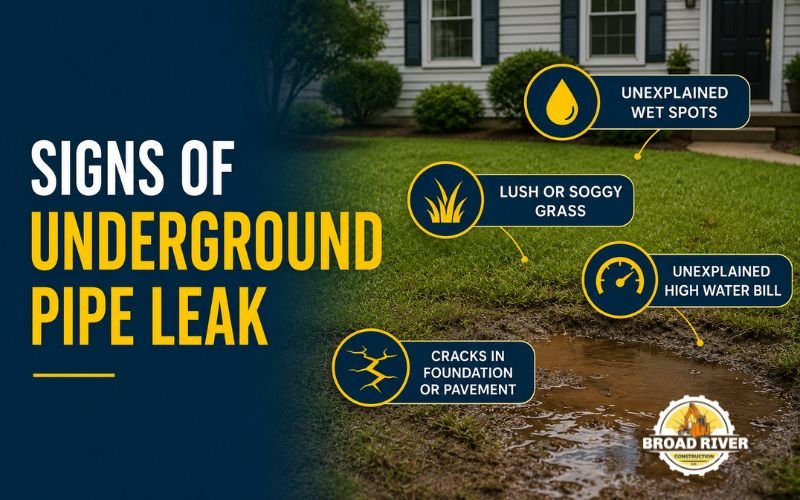
Water pooling in your yard is never a good sign. It usually means something is wrong below the surface. An underground pipe leak often starts small. But it doesn’t stay small for long. It quietly wastes water, raises your bill, and weakens the ground around your home.
Most homeowners don’t catch it right away, and when they finally do, it has already done the damage. That’s why it is very important to catch the leak in the early stages so you can avoid stress and unnecessary expenses.
What Is an Underground Pipe Leak?
A pipe cracks somewhere under your yard. Water seeps out slowly, day by day. You won’t see it happening at first. It stays hidden under dirt and grass. Signs show up only after damage starts.
Why Underground Pipe Leaks Are Dangerous for Your Home?
Even a small leak wastes real money. Your bill creeps up before you notice. Soil around the pipe softens over time. Your foundation can shift because of that. Wall cracks sometimes trace back to this. Mold thrives in the damp spots left over.
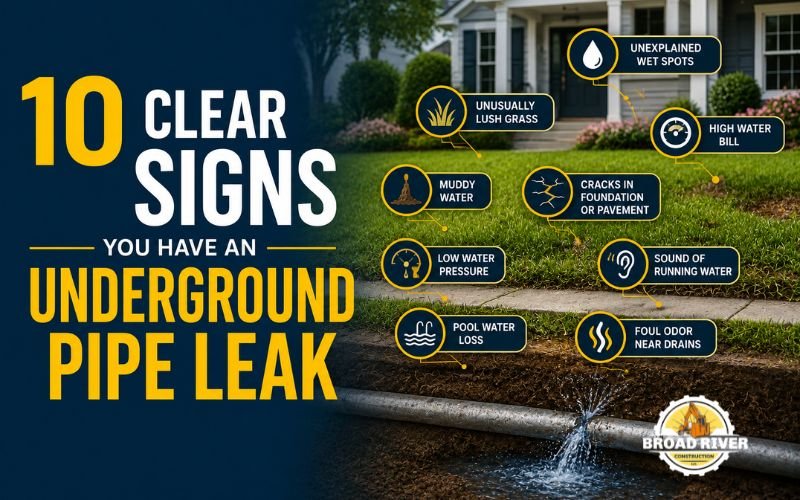
10 Clear Signs You Have an Underground Pipe Leak
Unexpected High Water Bills Without Using More Water
Your bill jumps with no clear reason. You haven’t used any extra water. That gap usually points to a leak. It’s often the first sign people catch.
Low Water Pressure in Your Faucets and Showerheads
Water barely trickles from your showerhead. Something is pulling pressure away first. A nearby leak could explain it.
Soggy Wet Spots or Mud in Your Yard
One part of your yard stays wet. No rain fell, yet it’s muddy. Water is probably rising from below.
Overly Green Grass Only in One Specific Area
One patch of grass looks unusually green. It’s getting extra water from somewhere. That’s rarely just good luck.
Puddles or Pooling Water Near Your Home
Water pools near your house and does not drain properly. This often means a leak nearby.
Sinkholes or Dips Forming in Your Lawn
The ground starts sinking in one spot. Water washed the soil out. Small dips can grow into large holes.
Musty Smells or Mold Growth Inside Your Home
A strange smell won’t leave your home, and you can’t trace where it starts. Moisture is likely sneaking in somewhere.
Water Stains on Walls, Ceilings, or Floors
Brown or yellow marks appear out of nowhere. These stains mean water moves upward. The leak has already reached indoors.
Warped Floors or Sagging Ceilings
Floors start bending or lifting slightly. Ceilings dip in one specific spot. This means the damage is serious now.
Running Water Sounds When Nothing Is Turned On
You hear water with every tap closed. It sounds faint, almost like hissing. That noise often means water underground.
| Sign You Notice | What It Likely Means |
| Bill jumps suddenly | Water is leaking somewhere unseen |
| Weak water pressure | Water escapes before reaching your taps |
| Wet yard patch | Leak sits close to the surface |
| Greener grass spot | Extra water is feeding that area |
| Sinking ground | Soil washed away from a leak |
| Wall or ceiling stains | The leak reached your home’s structure |
What to Do If You Notice These Signs
Step 1: Check Your Water Meter for Leaks
Find your water meter outside. Write down the number.
Step 2: Turn Off All Water and Monitor the Meter
Shut off every faucet and appliance. Wait thirty minutes without touching anything.
Step 3: Look for Wet Spots in Your Yard
Walk your yard and check the ground. Look for soft or soggy patches.
Step 4: Listen for Water Running Sounds
Stand quietly near a wall. Listen for a faint hissing sound.
Step 5: Call a Professional for Leak Detection
If the meter moves, act fast. Call someone trained in leak detection.
How to Confirm an Underground Pipe Leak
Checking your meter tells you something’s off. It won’t show the exact spot. That part needs real tools and training. Guessing usually leads to needless digging. A professional pinpoints the location faster.
Professional Leak Detection Methods
- Listening devices that pick up leak sounds
- Ground microphones that trace the exact spot
- Infrared cameras that catch temperature changes
- Small cameras sent directly inside pipes
These tools skip tearing up your yard. They save you time and cash.
What Causes Underground Pipe Leaks?
Age and Corrosion of Old Pipes
Old pipes wear thin over the years. Rust eats into pipe walls. Tiny cracks eventually form.
Poor Pipe Installation
Some pipes get installed incorrectly. Loose joints often turn into leaks. Rushed jobs cause problems later.
Soil Shifting and Ground Movement
Soil shifts more than people think. That movement stresses buried pipes. Cracks form after enough shifting.
High Water Pressure Stressing Pipes
Too much pressure pushes pipes hard. Over time, this weakens the material. A sudden break can follow.
When to Call a Professional Immediately?
- Your bill spikes and won’t go down
- You keep hearing water run nonstop
- Sinkholes or dips show up outside
- Musty smells spread through your home
- Cracks appear near your foundation
Waiting on these signs rarely helps. Acting fast keeps repairs smaller and cheaper.
How Underground Pipe Leak Repair Works?
A pro finds the exact leak spot. Then a small hole gets dug. The damaged section gets fixed or replaced. Some repairs skip heavy digging now. Trenchless repair works through small access points. It protects your yard while fixing the pipe.
Why Professional Detection Saves Money?
Guessing where a leak sits wastes cash. Random digging tears up your yard for nothing. A trained eye finds leaks much faster. That means less repair work overall. Your landscaping and foundation stay protected, too.
Common Mistakes DIY Leak Fixes Make
- Digging in the wrong spot entirely
- Using tape that only lasts briefly
- Ignoring what actually caused the leak
- Missing a second nearby leak
- Waiting too long before calling anyone
DIY fixes often end up costing more. A real repair solves the actual problem.
How to Prevent Future Underground Pipe Leaks?
- Get your pipes checked on a schedule
- Watch your water bill every month
- Notice any drop in water pressure
- Keep tree roots far from pipes
- Replace old pipes before they fail
Prevention always costs less than repairs. A few checks now save real money.
Regular Pipe Maintenance Tips for Homeowners
- Check your meter every couple of months.
- Walk your yard and look around. Listen for odd sounds near walls.
- Track your water bill each month.
How Broad River Construction LLC Helps CT Homeowners?
Broad River Construction LLC works with homes across Connecticut. Our team finds leaks quickly and accurately. We rely on modern tools, never guesswork. That means less digging in your yard. The repairs we do are built to last. Reach out when you need professional help.
FAQs
What are the signs of an underground pipe leak?
Watch for:
- high bills,
- low pressure,
- and wet spots.
- Sinkholes and stains often follow.
How do I know if I have a hidden water leak?
Turn off all the water and check your meter. If it moves, you likely have a leak.
Can an underground pipe leak cause high water bills?
Yes. Leaking water still runs through your meter. That pushes your bill up fast.
How do you find an underground water leak in your yard?
Look for
- wet patches,
- mud,
- or sinking spots.
Pros use listening tools for exact spots.
What causes underground pipe leaks in homes?
The following can cause leaks:
- Old pipes
- Unprofessional installation
- Shifting soil causes most leaks
- High pressure adds extra stress
Should I call a plumber for an underground pipe leak?
Yes, call one right away. Pros find leaks faster with fewer mistakes. You can contact Broad River Construction LLC anytime to handle everything accurately.
How much does underground pipe leak repair cost?
Cost depends on the leak’s size and location. A quick inspection gives you a real number.