
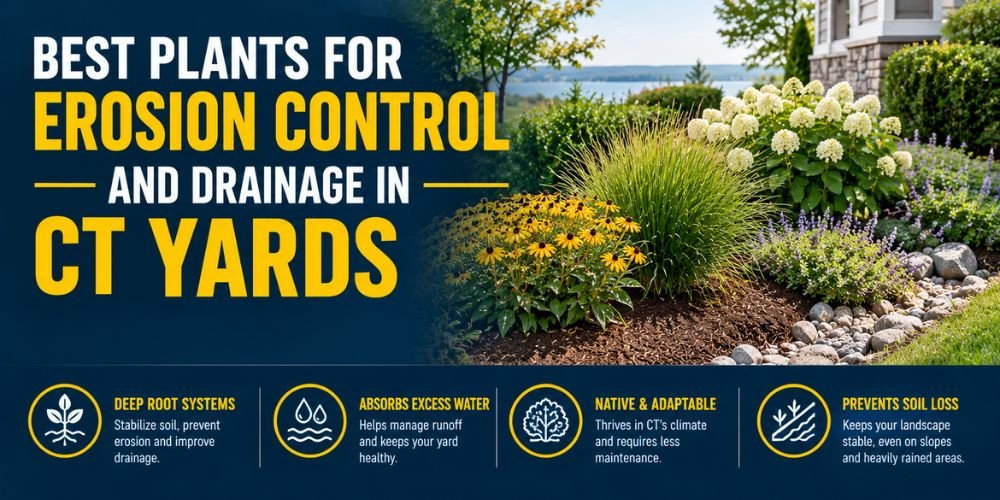
Soil washes away from slopes and puddles during heavy rain. Standing water can ruin the health of plants and lawns because it makes the roots weaker.
You need suitable plants that prevent soil erosion for the Connecticut weather. Some native plants are appropriate for wet soil and steep slopes in Connecticut. Let’s find out!
Plants to Reduce Erosion and Improve Drainage!
Roots connect the soil particles and prevent erosion. The foliage and stem can slow the speed of water as it flows across your lawn. Roots also form small holes in the soil, so rainwater can filter into the ground in these areas.
Plants can assist with minor runoff problems; however, they will not correct serious drainage problems. If water pools near your foundation or your yard floods often, it is time to hire a lawn care professional.
Inspect Your Yard
- Walk in your yard after every spell of heavy rain. The presence of puddles and bare soil is a red flag.
- Observe the direction of water flow.
- Next, check sunlight, as some plants prefer shade.
- Always test your soil before plant purchases. Clay soil is slower than sandy soil. Plant for the moisture and sunlight conditions in your yard.
Best Plants for Wet Areas in Connecticut Yards!
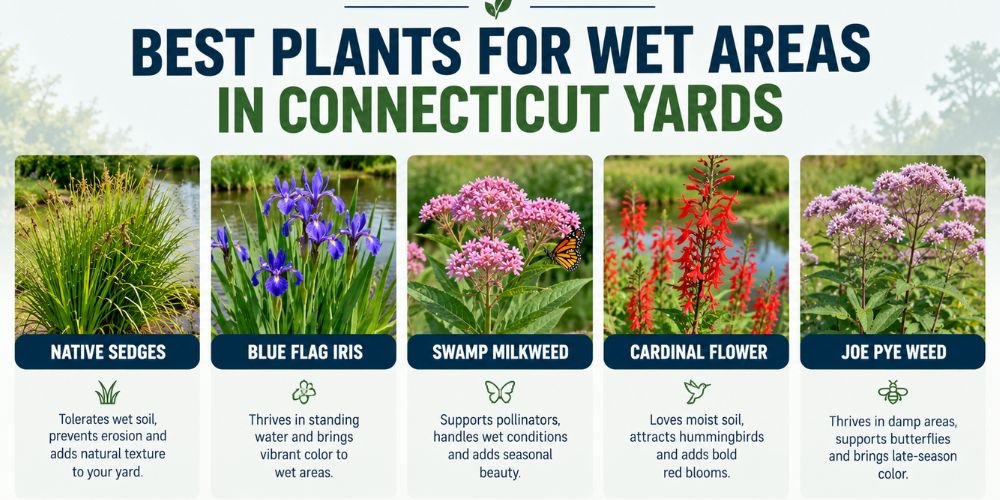
You can find plants that grow naturally in Connecticut that will work with moist soil. These plants are suitable for rain gardens and low yard sites that have some standing water following a rainy event.
1. Native Sedges
Tussock sedge is one of the best plants that can grow well in moist soil. They have a dense root system to stabilize soil near shallow drainage channels.
Put sedges at the edges of rain gardens or low spots that grass won’t grow in. Once native sedges take root, they require very little maintenance. Select a species for your soil moisture and level of sunlight.
2. Blue Flag Iris
Blue Flag Iris offers bright purple flowers. This beautiful flower thrives in soggy mud. Homeowners place the iris in low dips and the roots soak up huge pools of water. The leaves stand tall all summer.
3. Swamp Milkweed
Swamp Milkweed needs full sun and wet soil. Butterflies love this tall flower, so people add swamp milkweed to sunny yard spots. The deep roots drink water fast.
4. Cardinal Flower
Cardinal Flower blooms bright red. Birds visit the red blooms all summer.
You must place cardinal flowers in moist ground. Locals use this flower to border ponds. The roots love constant water access.
5. Joe Pye Weed
Joe Pye Weed grows tall and wide. You need space for this massive flower.
People plant Joe Pye Weed in big, low bowls. The plant needs huge water amounts to survive. Homeowners use these huge plants as wet yard solutions.
Best Plants for Slopes and Erosion Control in CT!
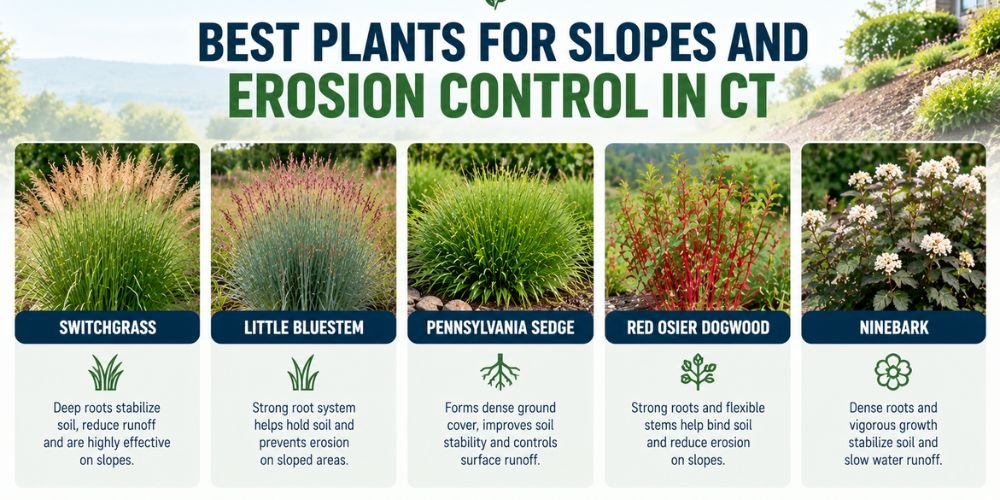
Plant | Best Location | Main Benefit |
Switchgrass | Sunny slopes | Deep roots help to stop soil erosion. |
Little bluestem | Dry, sunny banks | Dense root system retains soil. |
Pennsylvania sedge | Dry, shady slopes | Bare soil is covered with low vegetation. |
Red osier dogwood | Moist slopes | Shrub roots can keep soil in place. |
Ninebark | Sunny banks | Roots support stabilization |
Best Plants Suitable for Wet Conditions!
You may notice some wet areas a few hours after the rain. They are common around trees and fences. These areas need plants that survive in low light and wet conditions.
- Cinnamon fern and sensitive fern: Grow well in moist and shady areas. Roots stabilize soil under trees.
- Winterberry: Winterberry grows well in moist soil and part shade. The female shrub produces red berries with the assistance of pollen from a suitable male plant.
- Inkberry Holly: This plant loves to grow in moderate shade and moist soil. It is also an evergreen shrub suitable for yard borders.
Best Plants for Rain Gardens and Downspout Areas!
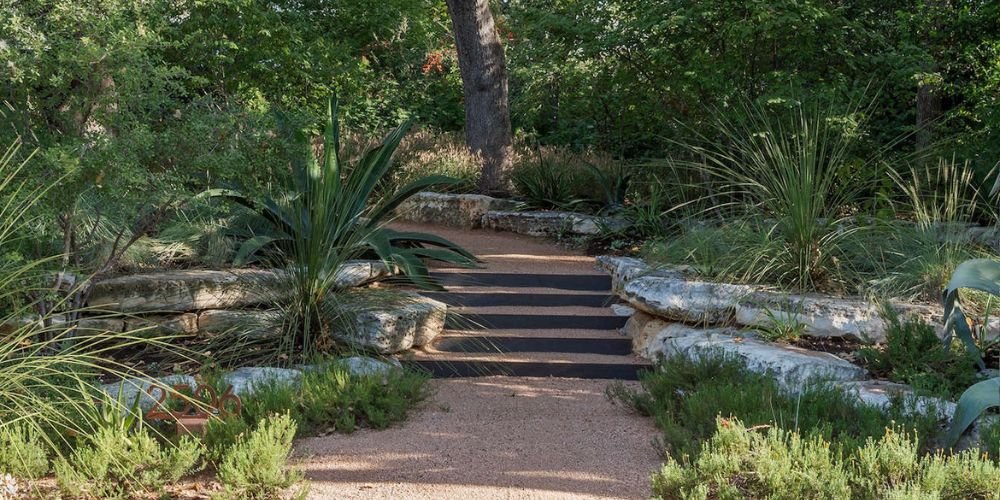
Shade and water create slippery mud spots. Locals struggle to dry out dark yard corners early in the year.
You must select plants to stop soil erosion in the dark. These choices survive low light and soggy ground. Homeowners find great success with these green choices.
a. Native Ferns for Damp Shade
Ferns love dark moisture. People plant beautiful green ferns under large trees.
b. Winterberry for Moist Shady Areas
Winterberry bushes drink excess water fast. The bright red berries feed wild winter birds.
c. Inkberry Holly for Wet Soil Near Yard Edges
Inkberry Holly stays green all year long. Homeowners use these strong bushes as natural yard borders.
Best Plants for Driveways and Patios!
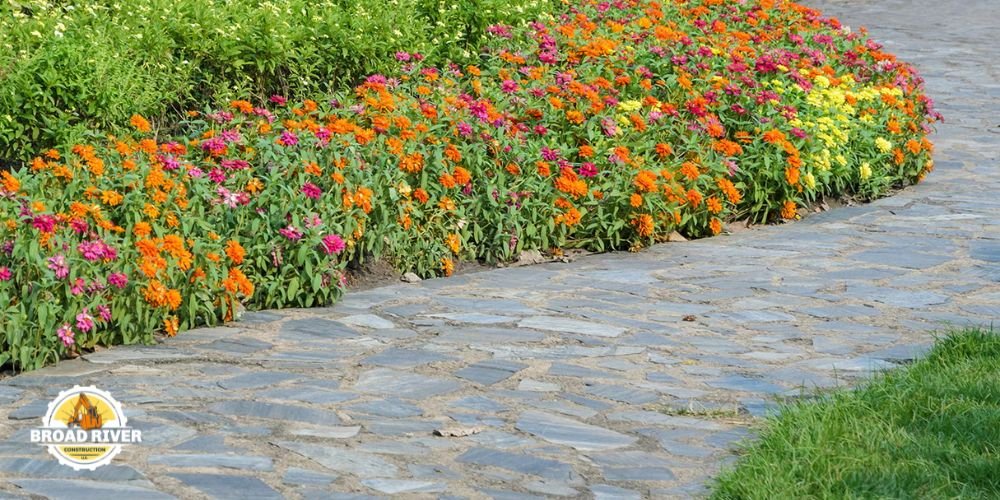
Switchgrass and little bluestem have a fair tolerance to road salt. They are both good roadside plants for sunny locations. Too much salt injures plant roots. Avoid having significant amounts of road salt near plants.
Sedges native to their region make excellent ground cover for areas around walkways with wet soil. People also plant them for their roots, which cover areas of bare soil that receive runoff from impervious surfaces.
Plants for Wet and Dry Conditions!
Seasonal moisture and dry periods after establishment are not harmful to switchgrass. Allow adequate space for plant development. Try not to have big shrubs in close proximity to narrow paths that block access.
Tips to Build a Simple Rain Garden in Connecticut!
- Rain gardens solve bad yard puddles fast. You can build a beautiful water catch area today.
- Dig the shallow bowl ten feet from the basement. You want water away from the walls.
- Point the main gutter pipes toward the low bowl. The pipes will fill the area fast.
- Place the best plants for soggy yards in the deep center. Use dry species on the high outer edges.
Frequent Planting Mistakes to Avoid in Connecticut!
Sometimes the poor choices of plants lead to more problems in the yard. People worsen yard flooding with bad choices.
- Place water lovers too close to the house
- Select plants unfit for the soil
- Ignore gutters, yard slopes and heavy water flow
- Use plants to avoid major drain repairs
When Plants Are Not Enough for a Wet or Eroded Yard?
Some water problems destroy the whole yard. Homeowners must hire experts for severe flood damage. Some of the signs are:
- Water runs straight into the home.
- Deep puddles stay for weeks.
- Mud slides cover the patio.
Seasonal Care for Erosion Control Plants in Connecticut!
Connecticut seasons have an impact on the soil moisture and plant health.
- Spring: Remove winter-damaged plant material, replace plants.
- Summer: Water new plants during dry weeks.
- Fall: Cover bare soil with mulch.
- Winter: Minimize exposure to road salt close to sensitive plants. L
- Post-Storm: Check slopes following big storms.
Erosion Control Plants Across Fairfield County!
The various yards in Fairfield County vary in soil and drainage characteristics. Select plants for your property.
- Norwalk, CT: Native sedges or blue flag iris are good options for yard plants in moist landscapes. Before choosing plants, test soil drainage in the vicinity of coastal areas.
- Darien, CT: Inkberry holly makes a good choice for wet yard borders in Darien. Don’t plant shrubs close to roadways along the coast without first checking for salt exposure.
- New Canaan, CT: Little Blue Stem is a good plant for dry slopes in New Canaan. Switchgrass is suitable for sunny banks that have seasonal moisture.
- Greenwich, CT: Red osier dogwood is a good choice for damp slopes throughout Greenwich. Provide established shrubs with sufficient room to grow.
- Westport, CT: Choose swamp milkweed for sunny rain gardens in Westport. Cardinal flower grows best in a moist location.
- Stamford, CT: Native sedges are good for moist borders on Stamford patios. Switchgrass provides soil protection on larger sunny slopes.
Get Help Draining and Controlling Erosion on a Yard!
Sometimes the puddles and soil erosion are caused by persistent conditions and more than new plants are needed. Broad River Construction LLC provides yard drainage and erosion evaluations. Call the team to discuss your property and the drainage options available.
FAQs
Which greenery holds loose soil together best?
Little bluestem and switchgrass build heavy underground networks that keep yards from washing out.
What grows well in constant puddles?
Native sedges thrive in wet areas and swamp milkweed handles seasonal moisture with zero trouble.
What is the best way to plant a sloping yard?
Anchor the dirt with switchgrass, then fill in the gaps with a mix of short grasses and shrubs.
Will plants dry out a soggy lawn?
They do a great job drinking up surface water—especially ferns in shady corners—but real flood zones need hard plumbing.
Which flowers work best for local rain gardens?
Put moisture-loving swamp milkweed in the center and line the high edges with hardy black-eyed Susans.
How close to the foundation can I dig a rain garden?
Always stay at least ten feet away to keep water from pooling against basement walls.
When is it time to stop relying on plants and install a French drain?
When water sits for days or heavy storms overwhelm your landscaping, a French drain is your best bet..