




Excavation Cost by Project Type
1. Foundation and Basement Excavation Cost
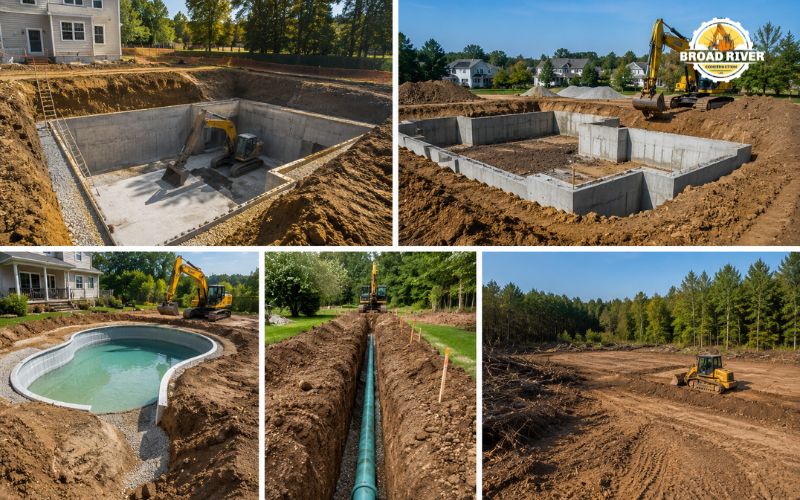
Your new home base needs deep, precise cuts to ensure structural stability for years to come. We clear organic topsoil away first and then dig down to the required frost depth.
2. Drainage and French Drain Excavation Cost
Proper French drains stop stubborn basement water from invading your living spaces during heavy rainstorms. We dig narrow trenches directly near your foundation walls to intercept subsurface water flow.
3. Underground Pipe and Sewer Trenching Cost
Utility lines require straight, clean trenches to ensure proper connections without future blockages. Safe pipe beds protect your fragile water and sewer lines from shifting ground.
4. Land Grading and Site Preparation Cost
Flat yards need proper grading to direct rainwater away from your house foundation safely. We shape the surrounding soil for positive drainage across your entire lawn area. Smooth, compacted surfaces prevent future pooling.
5. Pool Excavation Cost
Swimming areas require massive soil removal to accommodate large fiberglass or concrete shells, with basic pool holes typically ranging from $1,000 to $5,000. Large excavator buckets carve out the main hole with careful attention to depth specifications.
6. Land Clearing and Excavation Cost
Overgrown trees and thick brush block progress on new construction or addition projects. We push stubborn stumps completely out of the ground using heavy loader buckets. Heavy steel blades clear your lot efficiently so building can begin on schedule.
7. Retaining Wall and Masonry Excavation Cost
Heavy retaining walls need stable base trenches to support massive loads of stone and soil. We dig well below the frost line to prevent seasonal freezing from shifting the structure.
What Makes Excavation More Expensive in Fairfield County
a. Rock, Boulders, and Dense Soil
Solid bedrock slows down our excavation machines considerably during deep cuts. Heavy hydraulic breakers must crack stubborn boulders into smaller, manageable pieces before removal. This extra labor increases your final bill because the work takes twice as long to finish.
b. Sloped Lots and Difficult Equipment Access
Hills create serious machine tipping risks that require skilled operators and specialized equipment. Tight driveways stop large excavators from reaching the backyard work zone directly. Small mini machines take extra hours to move the same amount of earth.
c. Existing Landscaping and Hardscaping
Old concrete patios block direct paths to the main digging zone on older properties. Mature shade trees require careful hand work around delicate root systems to prevent tree death. Crews spend valuable time protecting your existing lawn and garden features.
d. Excavation Depth and Spoil Removal
Deep foundation holes require engineered shoring boxes to prevent dangerous wall collapses. Extra excavated soil needs truck hauling to offsite disposal facilities. High municipal dump fees add significant extra expense to your project total.
e. Underground Utilities and Existing Pipes
Buried gas and electric lines demand cautious hand digging before machines arrive. Active sewer pipes create major safety risks if accidentally struck by heavy steel buckets. Extra care slows down the machines significantly while protecting existing neighborhood infrastructure.
Permits and Local Requirements Before Excavation
When Is a Town Excavation Permit Required?
Local building boards check property plans thoroughly before approving any major digging activity. Town zoning agents inspect the site layout to ensure compliance with property setbacks. Approved legal papers protect your financial investment and prevent costly stop work orders.
Zoning Grading and Fill Requirements
Town municipal rules strictly limit soil pile heights and steepness on residential properties. Finished earth slopes must match neighbor property lines to prevent runoff disputes.
Inland Wetlands and Coastal Property Review
Natural water bodies need strict environmental protection from heavy construction runoff. Wetland boards review project maps carefully before granting any construction approvals.
Call Before You Dig in Connecticut
Dialing 811 before digging starts is a mandatory safety step. Utility crews paint underground line locations directly on your grass to prevent dangerous gas or electric strikes.
What Should an Excavation Estimate Include?
a. Labor, Equipment, and Digging Time
Professional quotes list hourly crew rates clearly for your review, with standard equipment and operator fees running between $100 and $300 per hour.
b. Soil Testing, Rock Removal, and Hauling
Laboratory tests check structural load limits for your specific soil type. Rock hauling details appear separately so you see exact tonnage charges.
c. Gravel Pipe Bedding and Backfill
Crushed stone bases support new utility pipes securely against shifting ground. Clean backfill material fills the hole properly around foundation walls.
d. Permits, Utility Marking, and Inspections
Town permit fee amounts stay listed clearly within the financial breakdown. Utility marking services show specific calendar dates for completion.
e. Driveway Lawn and Landscape Restoration
Fresh grass repairs fix ugly tire tracks left by heavy machinery. Driveway stone patches holes caused by loaded dump trucks. Complete yard cleanup finishes the job properly so your property looks pristine.
Ask whether each item is included, excluded, or billed separately.
How to Compare Excavation Quotes?
1. Compare the Scope of Work
Read every single line on the contractor paper agreement very carefully. Match specific tasks across different contractor bids to find discrepancies.
2. Check Whether the Contractor Is Registered and Insured
Active state licenses protect your property and ensure legal compliance. Valid proof keeps you financially safe from unforeseen mishaps.
3. Ask About Change Orders and Unexpected Rock
Rock discoveries happen frequently underground in this region. Clear written rules handle surprise underground costs efficiently.
4. Confirm the Timeline and Site Cleanup
Start dates need firm calendar spots to keep your project moving forward. Daily cleanup rules keep neighborhood yards tidy and safe. Final waste removal finishes the work thoroughly before final payment.
5. Do Not Choose Based on Price Alone
Low contractor bids often miss important safety steps and necessary site permits. Quality work prevents expensive future structural failures. Fair prices match professional results and long-term peace of mind.
How Homeowners Can Lower Excavation Costs?
1. Prepare Plans and Property Information Early
Clear property maps save crew hours and prevent costly mistakes. Accurate land surveys stop costly boundary errors.
2. Keep Equipment Access Clear
Move parked cars completely off the driveway before the crew arrives. Remove wooden fences temporarily to create wide machine paths.
3. Combine Related Drainage or Pipe Work
Dig once for multiple underground projects instead of scheduling separate visits. Share trench lines for electrical and water utilities simultaneously.
4. Plan Soil Disposal Before Digging Starts
Local fill spots save expensive trucking fees across long distances. On-site soil spreading lowers commercial disposal bills significantly. Smart planning cuts total project expenses in half.
5. Repair Drainage Problems Before They Damage the Foundation
Early fixes stop major structural failures before they start. Simple yard grading stops water from pooling near basement walls.
What to Do Before Your Excavation Project Begins?
1. Photograph the Existing Property
Snap clear pictures of your fence and exterior walls. Record driveway condition details before heavy trucks arrive. Photos protect your property rights if minor cosmetic damage occurs.
2. Mark Access Routes and Property Boundaries
Flag your physical property line stakes clearly with bright ribbons. Spray paint intended machine travel paths across the grass. Clear marks stop boundary disputes with adjacent neighbors instantly.
3. Confirm Utility Locations and Permit Status
Check spray paint marks on your grass for completeness. Verify town permit stamp approvals with the building department. Safe sites start without unexpected municipal delays.
4. Ask for a Written Start Date and Project Scope
Paper contracts protect your formal agreement against misunderstandings. Signed dates lock your spot on the contractor schedule.
When to Hire a Professional Excavation Contractor?
Foundation and Basement Excavation
Deep holes require heavy machines and expert operational control. Proper benching stops dangerous wall cave risks completely.
Sewer, Water, and Underground Pipe Work
Main utility lines need correct pitch slopes to function properly. Improper pipe slope causes messy backups and clogs.
Drainage and Slope Problems
Complex yards need comprehensive water management plans to succeed. French drains require exact depth levels to drain properly.
Excavation Near Roads, Utilities, or Property Lines
Tight spaces demand expert operators who understand heavy machine limits. Property stakes guide safe cuts away from shared boundaries.
Hire Professional Excavation Contractor Across Fairfield County
Serving Norwalk, Stamford, Greenwich, Darien, Westport, and New Canaan
Local properties require specialized site knowledge to handle unique terrain challenges. Town rules demand careful navigation of local conservation boards. Regional experience protects your long-term property investment.
How Broad River Construction LLC Helps With Excavation
Broad River Construction LLC delivers reliable site preparation across the entire region. Our experienced crew handles complex rock removal and precise lot grading. We manage town permits and safe utility trenching so you can relax.
FAQs
How much does excavation cost in Fairfield County, CT?
Prices range from $1,500 for small residential trench jobs to over $10,000 for massive foundation digs. Total costs depend heavily on rock presence and total machine hours required.
Which town has the highest excavation costs?
Greenwich and Westport see higher prices due to local market conditions. Large estate properties and strict municipal rules raise total contractor costs significantly.
How much does foundation excavation cost in Norwalk, CT?
Foundation digging costs depend entirely on the house footprint size and soil depth. Standard local lots see moderate pricing compared to rocky northern towns.
What does utility trenching cost in Stamford, CT?
Trenching prices depend on total trench length and required digging depth. Rock presence increases the final total.
Does excavation pricing include dirt removal and disposal?
Some contractor quotes include hauling fees within the initial price. Other bids bill commercial dump charges separately based on actual truckloads. Check your written contract details.
Do I need a permit for excavation in Fairfield County?
Town zoning rules require permits for almost all major site work projects. Local building departments review property plans first to ensure public safety.
How can I get an accurate excavation estimate?
Schedule an onsite property visit with Broad River Construction today. We review your land plans thoroughly and provide a clear quote.