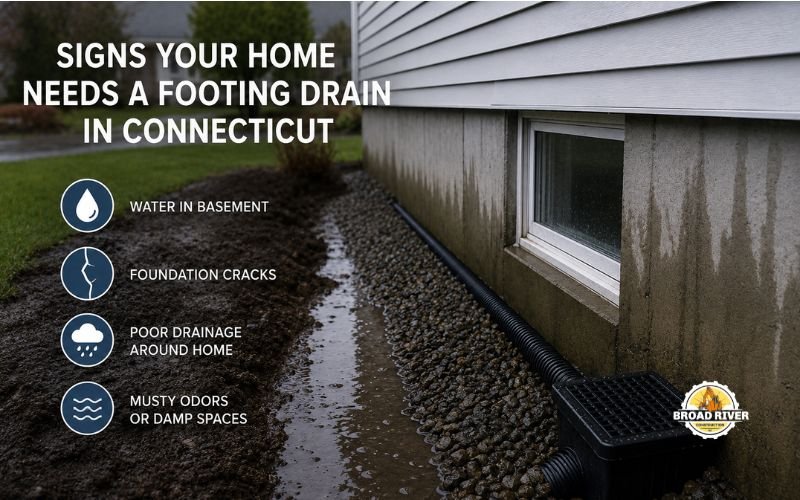
Water is a great threat to residential properties in Connecticut. Sloped land, rainfall, and snowmelt all lead to water buildup around the property and may damage its foundation. You may get costly repairs if you don’t address this problem beforehand.
A footing drain can save you from expensive repairs and protect your home. Look out for the warning signs that indicate your property needs a footing drain installation in Connecticut.
What Is a Footing Drain and Why Homes in Connecticut Need One?
A footing drain is also known as a foundation drain or a drain tile system. It is a pipe installed beneath your home’s foundation. The pipe has small holes and has gravel around it. It collects groundwater when it moves through the soil and carries it away from the home.
Your property needs a waterproof footing drain because of the weather patterns. Heavy rainfall, clay soil, and uneven land often cause water pooling around the foundation. Footing drains help prevent this water collection and save your home.
Common Signs You Need a Footing Drain in Connecticut
Sign 1: Persistent Water Seeping at the Floor-Wall Joint
This sign gives a clear warning of a drainage issue and the need for a footing drain. Water buildup pushes against the soil and seeps through the joint. Leaks after rainfall are a warning sign that the ground is wet around your home and requires a proper drainage system.
Sign 2: Step Cracks or Horizontal Fractures in Foundation Walls
Notice stair-step cracks in masonry or in foundation walls? These are structural red flags. These indicate that hydrostatic pressure is increasing against the foundation walls. It shifts the soil and causes severe damage to a house. Call a footing drain repair professional to prevent any structural collapse.
Sign 3: Efflorescence and Peeling Paint on Basement Walls
White stains on the basement walls are called efflorescence. It appears when water passes through the wall and leaves minerals behind. White stains do not damage walls, but indicate the presence of moisture in the foundation.
Peeling paint is another warning sign that gives indications of ongoing moisture. A footing drain can prevent water from getting into the walls.
Sign 4: Chronic Musty Smell and Indoor Humidity Spikes
Wet soil releases moisture and water vapor into the basement. Mold grows on this moisture and creates this earthy smell. It also increases indoor humidity. A dehumidifier can remove moisture, but cannot stop water entry into the foundation. A footing drain solves this issue. It works outside and redirects the water before it builds up.
Sign 5: Soggy Lawns & Spongy Soil Near Foundation
Soft ground or difficult mowing are clear signs of poor yard drainage. It is often due to poor grading and soil compaction, which prevent water drainage. It can affect root development and overall plant growth if not fixed. A footing drain can fix this issue and save your investment in landscaping.
Why Connecticut Homes Are Especially Vulnerable to Water Damage?
Connecticut properties often face water problems due to:
- Heavy clay soil
- Ground movement
- Heavy snowmelt and rainfall
- Sloped terrain
These factors make water drainage a big concern. It builds up in low areas and creates pressure on outdoor structures, and may leak into the homes.
What Happens If You Ignore Footing Drain Problems!
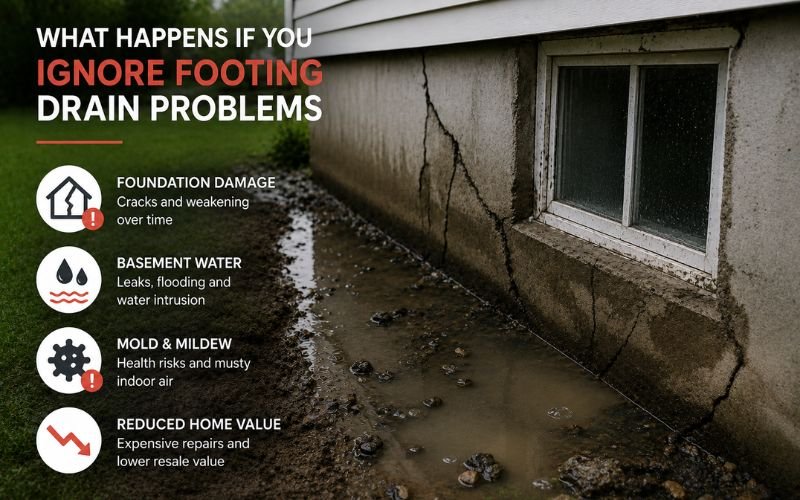
Neglect of the footing drain issue can become a serious problem in the future. The following problems can occur if you avoid footing drain repair.
- Constant moisture affects the foundational structure of the home.
- Damp walls may promote mold growth.
- Cracks, soil shifting, and basement leaks lead to expensive repairs.
- Wet soils attract insects and can cause health issues.
- Uneven floors and visible water signs on walls definitely reduce property value.
Footing Drains vs French Drains:
| Features | Footing Drain | French Drain |
| Location | 6 – 10 feet below ground level, installed at the house’s base | 1-3 feet deep, closer to the property surface |
| Purpose | Prevent underground water and basement flooding | Redirect excess water from problem areas |
| Installation Time | During foundation construction | Anytime as a landscaping improvement |
| Cost | High | Low |
| Outlet System | Sump pump | Dry well, or storm drain |
Footing Drain Repair vs New Installation:
Do you need footing drain installation or repair? Let’s decide what your property needs.
- Footing drain repair clears the blockages through hydro jetting and fixes small sections. Repair is best when damage is limited to some areas.
- Drain installation is required when pipes are broken and move out of their place. It involves the replacement of the drain, the removal of the old pipe, and the new installation.
DIY Fixing vs Professional Footing Drain Services
Downspout extension, gutter cleaning, and soil grading are easy tasks that you can do without any professional help. However, drain repair or installation requires licensed contractor guidance. It requires ground digging, material selection, and working near utility lines, requiring careful planning and equipment use.
How to Choose Best Footing Drain Contractor in Connecticut?
- A reliable contractor is necessary to ensure professional drain installation and work. You can follow these guidelines when selecting a footing drain contractor.
- Check their license and experience in drainage work.
- Ask past customers for honest reviews.
- It is a local contractor that understands local soil, climate, and drainage issues.
Broad River Construction LLC fulfills all the requirements and provides drainage solutions through dependable footing drain installation services. You can connect with our team for a quick inspection and a fast installation process.
Maintenance Tips to Keep Your Footing Drain Working!
A footing drain requires regular care for long-term, smooth operation. Here are some suggestions that can help you with its maintenance.
- Clean the gutters and downspouts for proper water flow
- Avoid trees or plant installation near the foundation
- Test the sump pump before the spring or fall season
- Check the discharge pipe regularly
- Get a professional inspection after a few years
Conclusion
A footing drain is an addition for your home’s safety. It gives protection from basement leaks, foundation cracks, and bad smells. Early sign recognition can save you from costly repairs. Inspect your home and share your feedback for professional guidance.
FAQs
How do I know if my Connecticut home needs a footing drain?
Water seeping into the floor-wall joint, white stains, cracks in the steps, wet lawns, and a constant smell. These signs indicate your home requires a footing drain.
What’s the cost of footing drain installation in Connecticut?
Foundation drainage installation costs $40 to $85 per ft.
Can I fix footing drain problems myself in CT?
No. It requires deep digging, permit approval, and the use of heavy machinery that a licensed professional can do.
How long does a footing drain system last in Connecticut?
A footing drain can last for twenty to forty years.
Do footing drains prevent basement flooding in CT winters?
Yes. It prevents basement flooding if it has a proper slope and a protected discharge line.
When should I repair vs replace my footing drain in Connecticut?
Repair is needed when there is only a blockage issue or the system needs a few fixes. Replacement is required when the system is old or the pipes are broken.
How do footing drains work with sump pumps in CT homes?
They work through a closed-loop system. Drains collect water from the foundation, and the sump pump pushes it outside your property.